
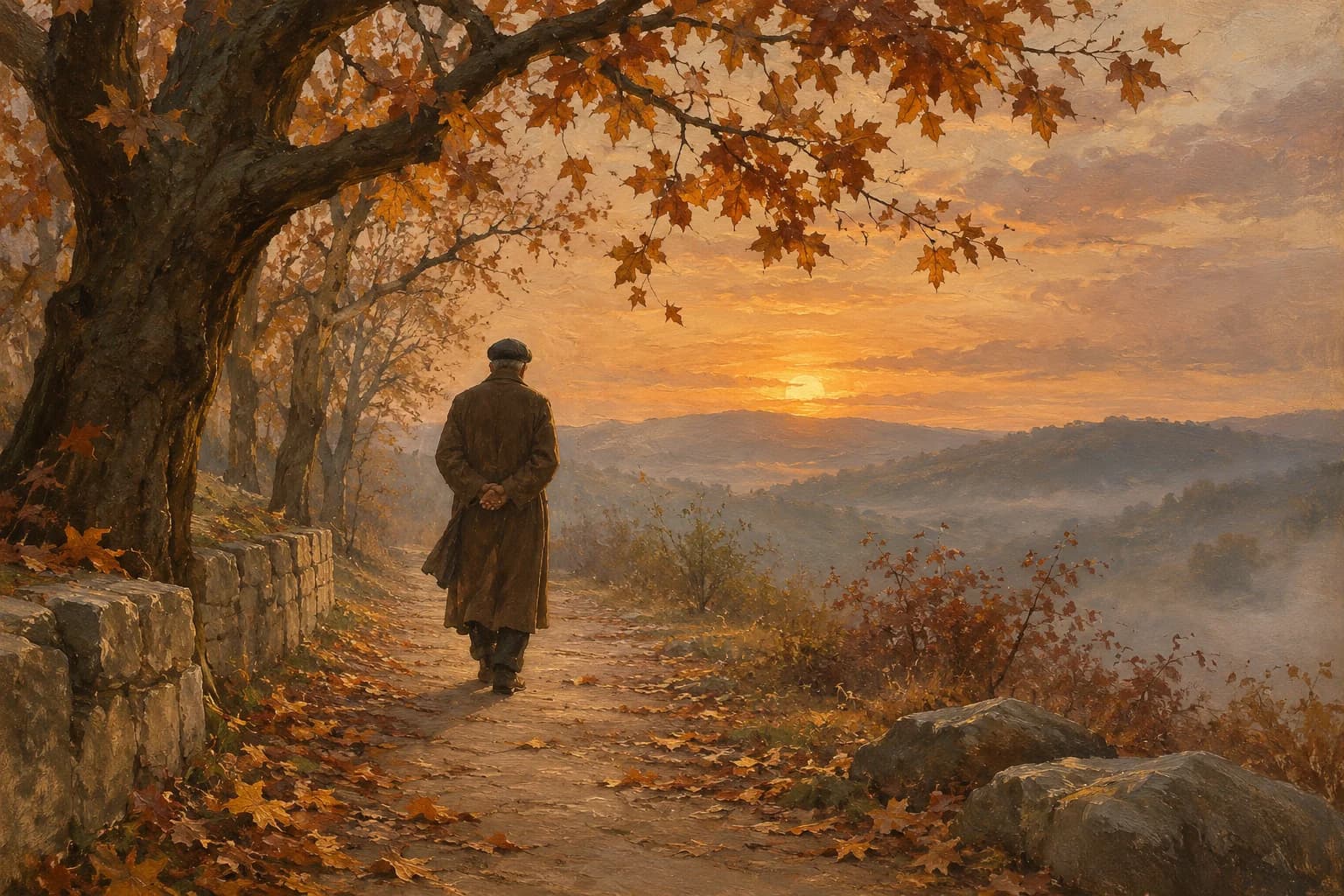
The story of the heart seeking eternity amid transience
When things grow quiet in the evening, a memory we have not thought of for years suddenly comes alive. We remember a friend’s laughter, even where we were sitting that day. We want to return to that moment. Sometimes a single memory makes us reflect on how an entire lifetime has passed.
In the Fourth Ray, also known as the Hasbiye Treatise, Bediuzzaman Said Nursi recounts such an experience from his own life. At a time in his old age when he felt the weight of exile and illness, he says, “I looked directly into my heart and searched for my soul.” [1] He finds within himself a powerful desire to live. The thought that this life, which he loves so dearly, will one day come to an end also weighs heavily on him.
The traces left within us by those who have passed
One autumn evening, an elderly man visits his old neighbourhood. He stops at the door of the house where he spent his childhood. In the past, if he lost himself in play and stayed outside until dusk, that door would open a little and a voice from within would call him home. Remembering that voice, he waits there for a while.
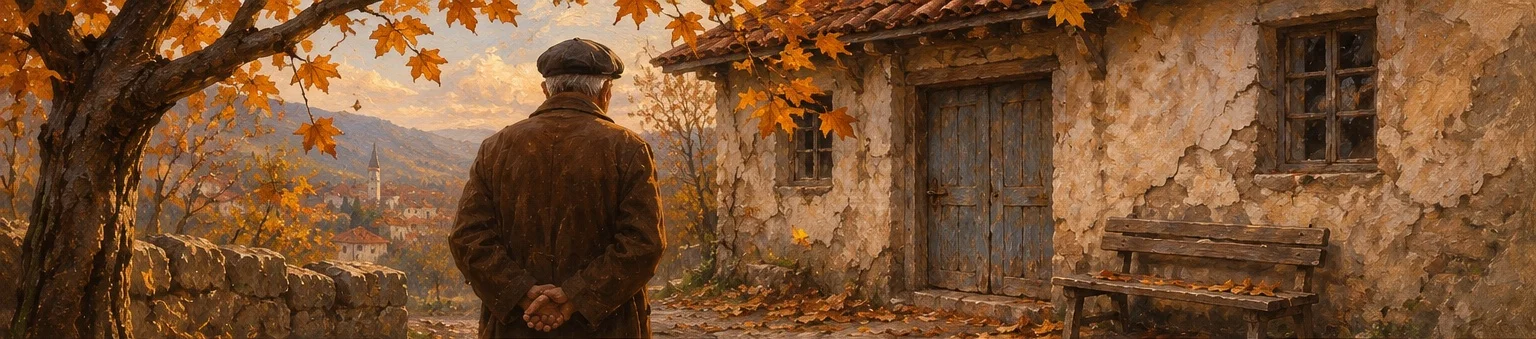
As he continues on his way, a yellowed leaf falls into his hand. He does not let it go at once. When he reaches the end of the street, his thoughts are still at the door of that house.
The thought of nonexistence
When people think about the end of their own lives, they fear that the bonds between them and their loved ones will also be severed. For a mother, even the thought that her love for her child is limited to this life is difficult to bear. What Bediuzzaman calls the “love of eternity” is this desire for eternity that we feel for ourselves and those we love.
As Bediuzzaman experiences this anxiety, the Verse of Hasbiye comes to his aid. He recites the verse repeatedly, and with each recitation reflects on the connection between his own existence and the everlastingness of Allah.
Hasbünallâhu ve ni‘mel vekîl.
Allah is sufficient for us, and He is the best Trustee!(Āl ʿImrān 3:173)
The light in the mirror
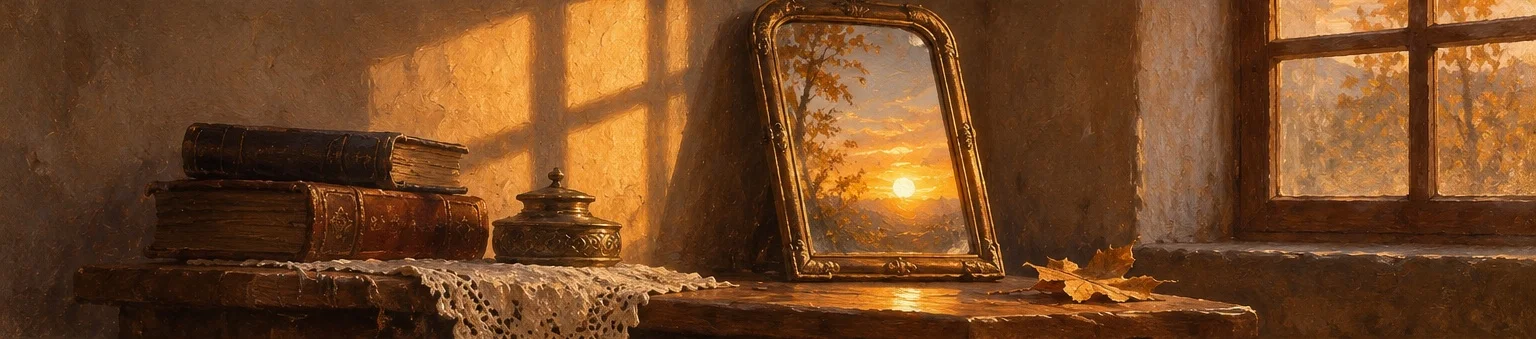
A mirror held up to the sun shines brightly. A slight movement of the mirror is enough for the gleam to disappear. When we lift our heads and look, the sun is still there.
Bediuzzaman likens his own existence to a mirror. He sees in that mirror the manifestation of one of Allah’s Names. When, through heedlessness, he forgets the source of that beauty, the love within him, in his words, “had clung to the shadow and fallen in love with the mirror’s permanence.” [2] He imagined that the beauty he saw in himself would last only as long as his own life.
The everlasting fruits of life
People grow attached to their homes, their friends, and the years they spend with them. When one day they have to move out of that home or bid farewell to a friend, they understand more clearly how much space this bond has occupied in their lives. As Nursî reflects on the fate of his own life and the beings he loves, he relies on the everlastingness of Allah, who created and sustains them. He also hopes for eternal life from Him.
Bediuzzaman calls faith in Allah and the good deeds that arise from this faith “the everlasting fruits of mortal life.” To explain this, he gives the example of a seed that sheds its shell in order to become a fruit-bearing tree. [3] The value of a good deed done with this hope endures even after those who witnessed it have forgotten it.
The value of transient beauty
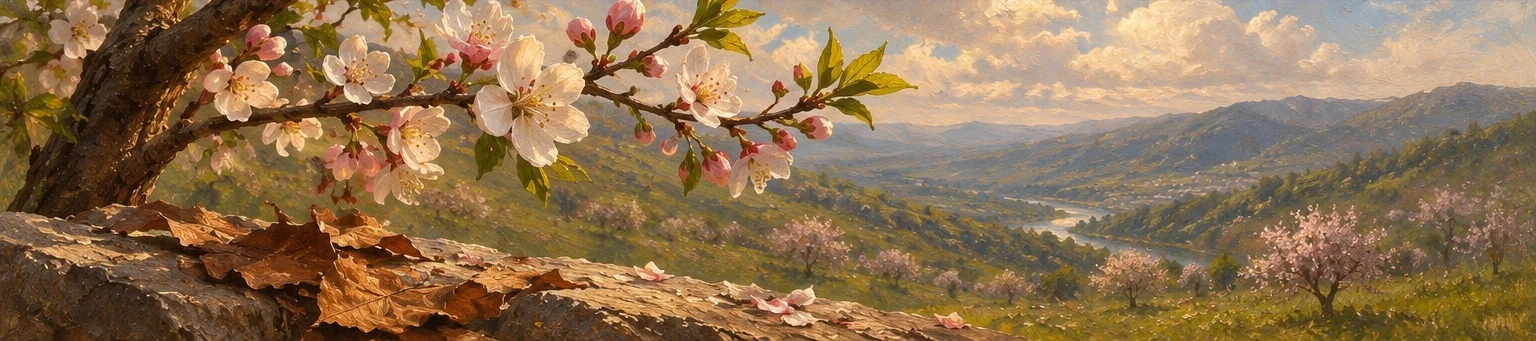
At the beginning of spring, if we see a newly opened flower among dried leaves, we stop and look. That flower, which will fade within a few days, reminds us of Allah’s جمال, that is, the beauty that appears in created beings. In the fourth degree of the treatise, Bediuzzaman says that, as he reflects on the beings he loves, he finds “permanent reunion within a temporary separation.” [4] Knowing that they belong to the same Lord, he feels close to them even amid separation.
At the end of the street, the elderly man leaves the leaf on the ground. The sun has sunk behind the hill. He turns once more to look at the house of his childhood. How very much he would like to hear again the voice that used to call him inside.
The desire to be reunited with those we love also plays a part in the human longing for eternity. Bediuzzaman connects this hope to the mercy of Allah, who has given us life and love.
Bediuzzaman Said Nursi, The Rays, Fourth Ray (Hasbiye Treatise), published by IIKV.
[1] p. 53 · [2] p. 54 · [3] p. 56 · [4] p. 60
The elderly man’s autumn walk is a fictional account.
Related content
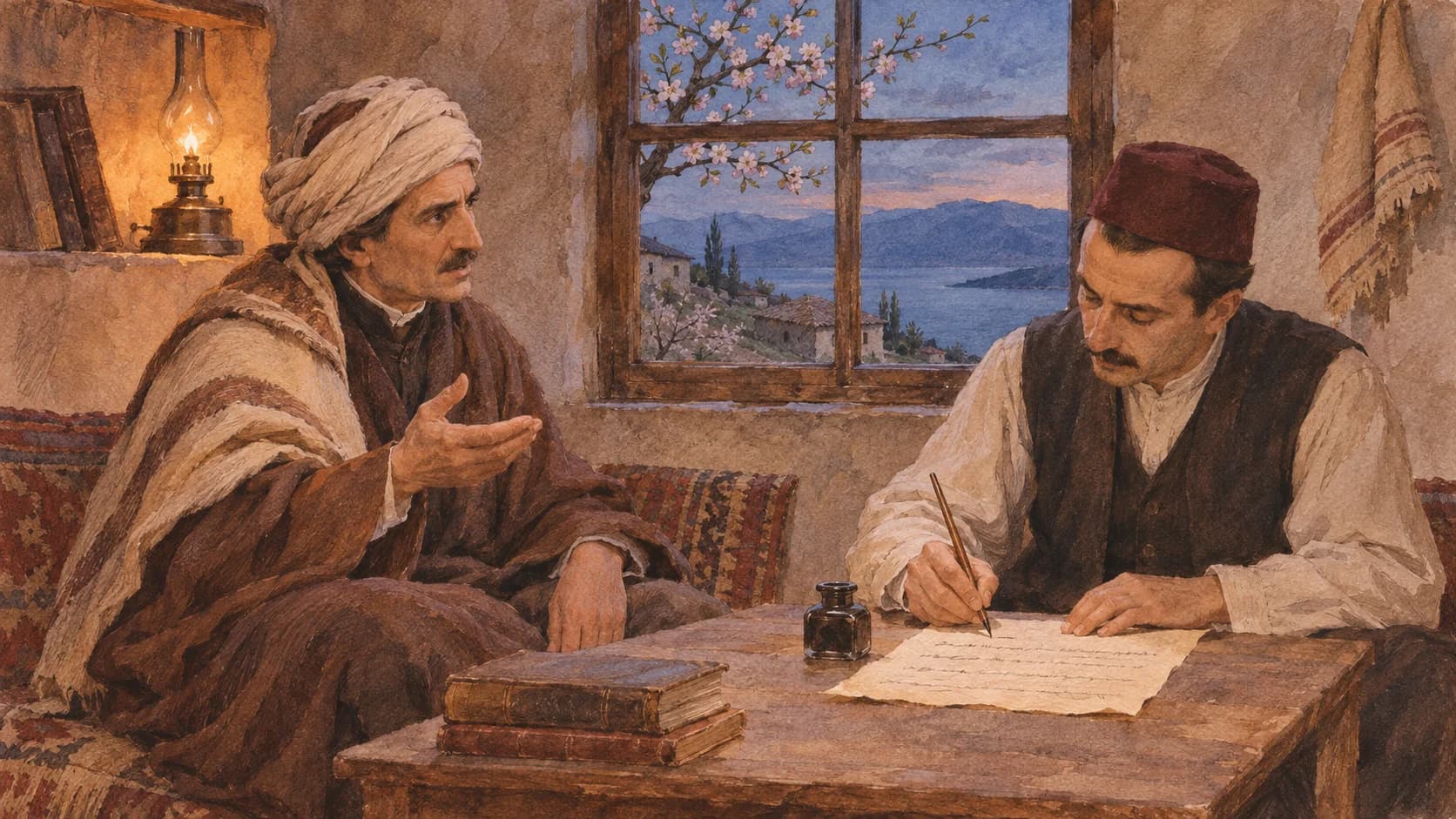
An Evening in Barla, a Thousand Pens
Bediuzzaman Said Nursi had the Treatise on Resurrection written down by Şamlı Hâfız Tevfik in Barla. The story of the treatise’s journey from Barla to Istanbul also illustrates the important role played by the students in the authorship and reproduction of the Risale-i Nur.
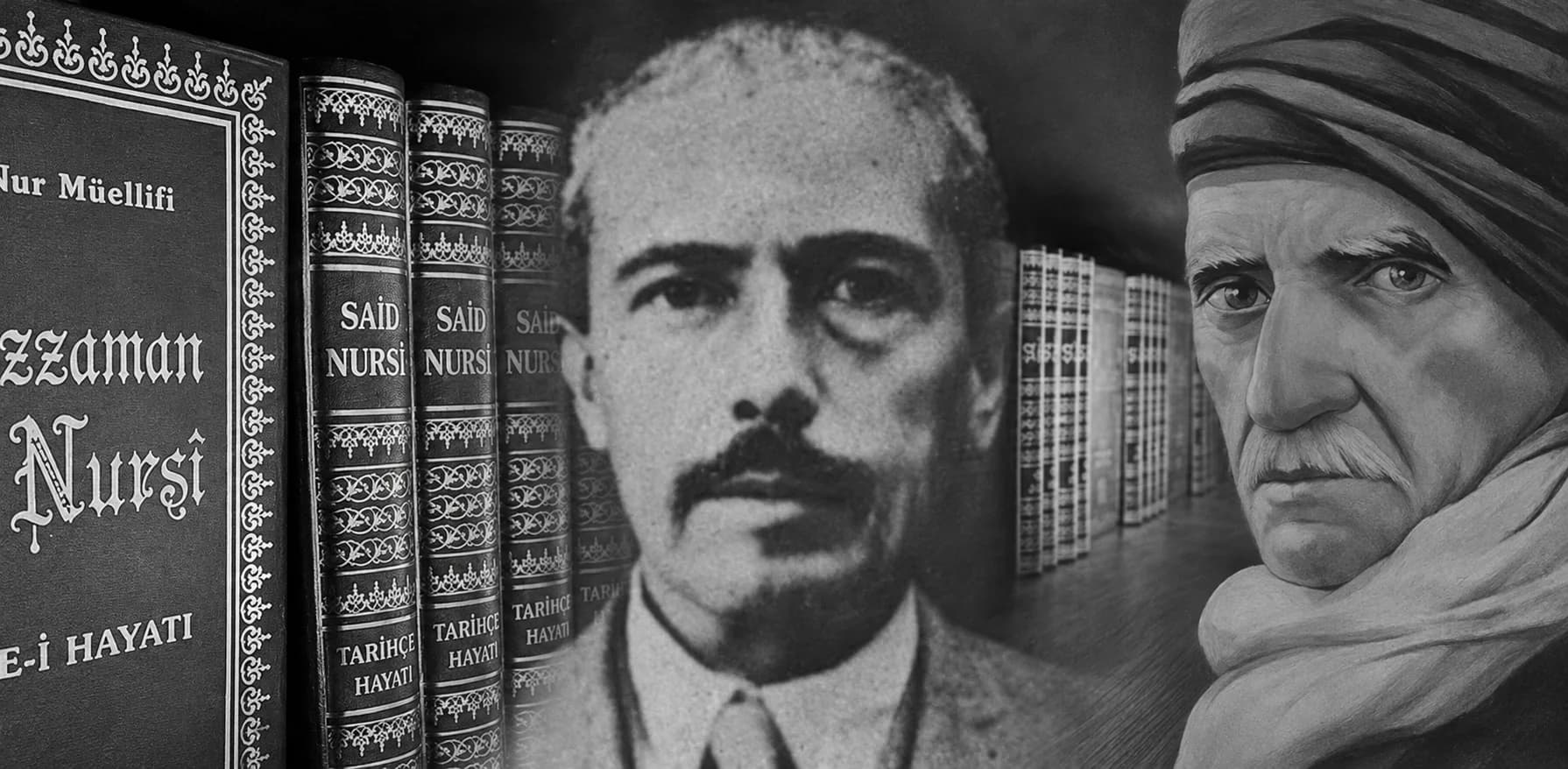
A Farewell in Goncalı
The life of Denizli-born teacher Hasan Feyzi Yüreğil can be reread through a family photograph and letters travelling back and forth between two cities.

Between Need and Want
A discount label can make something we had not considered seem like a need. The Treatise on Economy teaches us to find moderation in our spending and to appreciate the value of blessings.
A Commentary Written on the Front
The story of the composition of İşârâtü’l-İ’câz, from lessons in Van to the front