
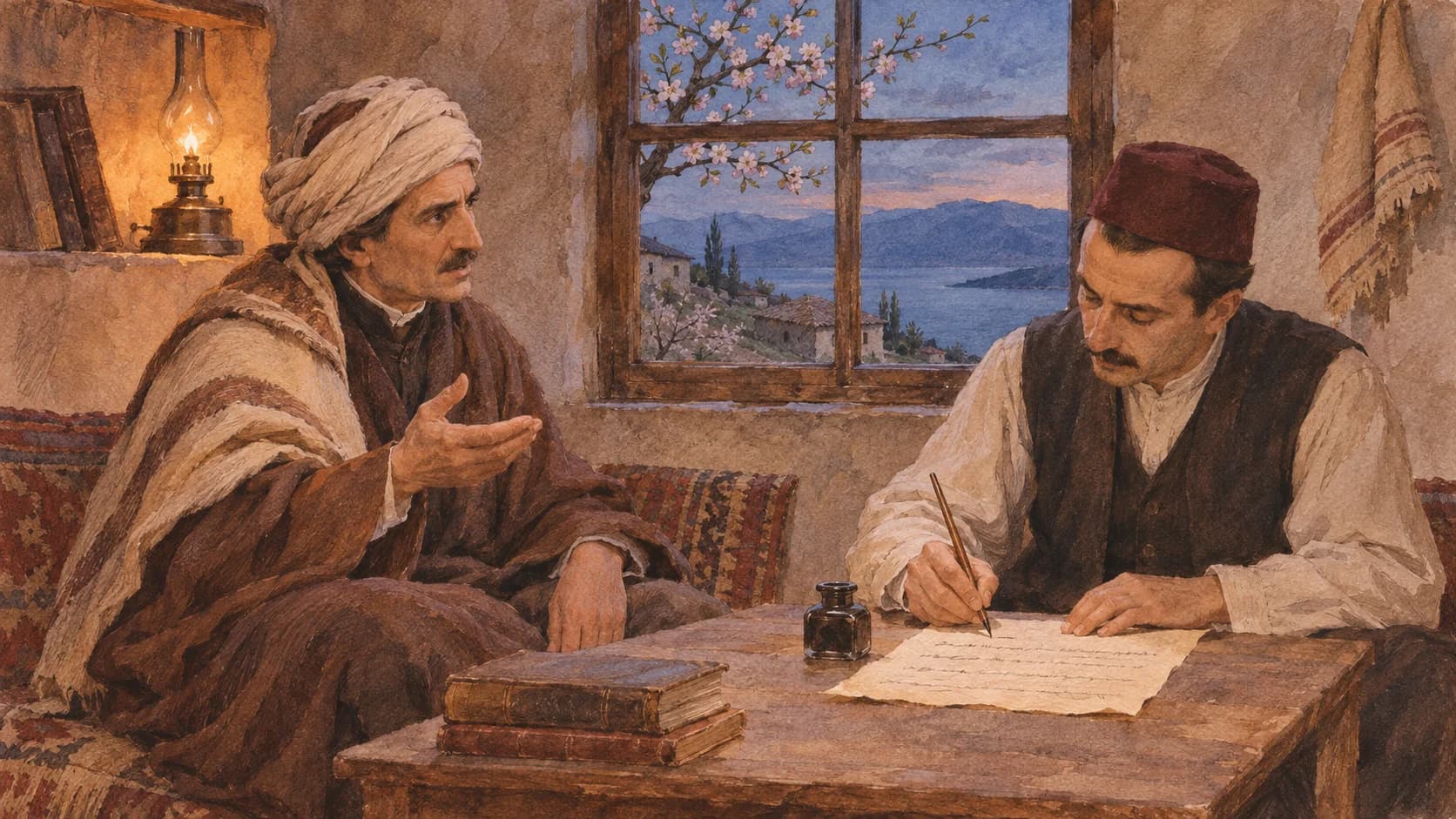
Bediuzzaman Said Nursi had the Treatise on Resurrection written down by Şamlı Hâfız Tevfik in Barla. The story of the treatise’s journey from Barla to Istanbul also illustrates the important role played by the students in the authorship and reproduction of the Risale-i Nur.
In 1954, Said Nursî took his students Zübeyir Gündüzalp and Mustafa Sungur to the gardens on the slopes descending to Lake Eğirdir in Barla. The almond trees were in bloom. He related that years earlier, while walking there in the same season, he had repeatedly recited aloud verse 50 of Surah al-Rum. The verse, which calls us to look upon the earth brought to life in spring, declares that God will also raise the dead. That day, the meaning of the verse had been revealed to Nursî. When he returned to Barla that evening, he had composed the Treatise on Resurrection, which we know today as The Tenth Word. He recalled that evening saying, “I spoke, and Hâfız Tevfik wrote.” [1]
Years later, Hâfız Tevfik told Bayram Yüksel how he and the Master would go out into the secluded countryside and work there. He said that he made an extraordinary effort to keep up with Said Nursî’s rapid dictation. There were treatises they had written down in this way in an hour or two. “At another time, I could not have finished writing the same treatise in two days,” he would say. [2]
A letter in his own hand
One day, one of his students asked Said Nursî for a letter in his own handwriting. Nursî responded to this request with a witticism. A man without lips was once asked to blow out a lamp. The man replied that they had asked him to do the most difficult task. For Nursî, writing a single line on paper was just as difficult. In his defence in Eskişehir, he also explained how much time this took. He could write only one page in an hour, and even that page would contain omissions. [3, 4]
In the continuation of the letter, he explains what the difficulty of writing had taught him. “In the past, whatever discipline I began studying, since I had no handwriting, I would write it in my soul,” he says. He had grown accustomed to retaining what he learned in his mind and heart. When he needed to put matters down on paper, his students helped him. [3]
Copies returning to Barla
Bekir Dikmen, a merchant from Barla, took a copy of the Treatise on Resurrection to Istanbul. He gave the copy to Müküslü Hamza Efendi, one of Nursî’s former students. With Hamza Efendi’s help, a thousand copies of the treatise were printed. The books were brought from Istanbul to Eğirdir, and from there to Barla by boat. [5]
The order of some pages had been mixed up in printing. Before the copies were distributed, Nursî corrected this by adding notes indicating which page should follow. [6]
The Treatise on Resurrection had reached the printing press. In those years, the treatises composed in Barla were reproduced mostly by hand. A student who received a copy could rewrite it and pass it on to other readers. [3]
The IIKV archive holds a passage from The Twenty-Fourth Word in Bediuzzaman’s handwriting. In a handwritten copy of The Ninth Word, he added the words “From the Scales of Risale-i Nur” to the heading in his own hand. On that page, Bediuzzaman’s handwriting sits alongside that of the student who wrote out the text. [7, 8]
Years later, in the Emirdağ Appendix, Bediuzzaman explained the wisdom behind this difficulty with handwriting as “finding a thousand pens in place of one.” [9] That spring evening in Barla, Hâfız Tevfik had put the Master’s words on paper. The treatises we have at hand today bear the efforts of many students who copied out the entire text in front of them so that someone else, too, might read it.
Archival documents
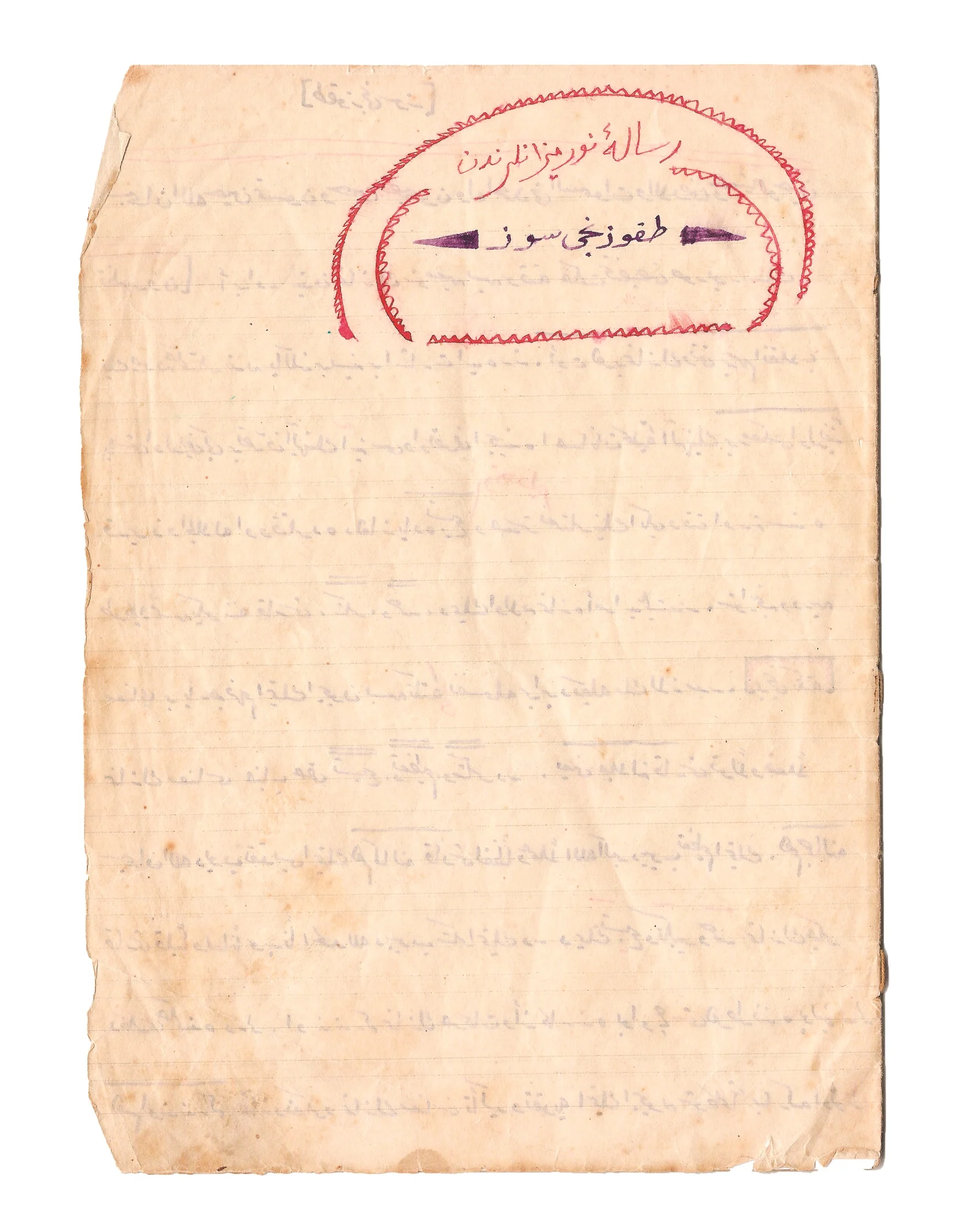
The Ninth Word. IIKV Archive. [8]
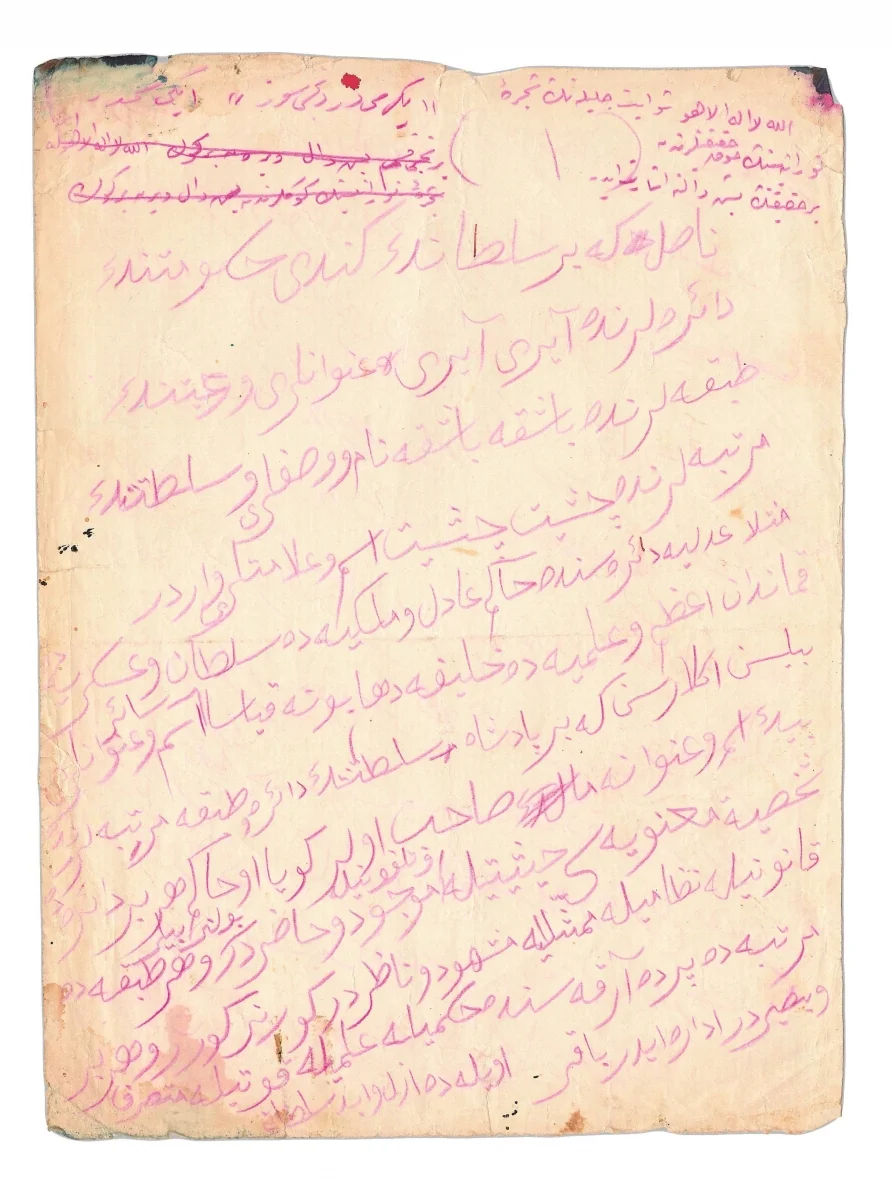
The Twenty-Fourth Word. IIKV Archive. [7]
Sources
1. Mustafa Sungur’s recollection of its composition, Elders Tell Their Stories, vol. 1.Also Necmeddin Şahiner, Intellectuals Speak, p. 395.
3. Said Nursî, Barla Appendix, his reply to the student who asked for a letter in his own handwriting.Also the introduction to the Barla Appendix.
4. Biography, Life in Eskişehir, p. 197.
5. The printing of The Tenth Word in Istanbul and its arrival in Barla, Nurpedia, “The Tenth Word.”
6. Mehmet Fırıncı’s account, “How Was the Treatise on Resurrection Published?”, Barla Platform.
7. IIKV Archive, a passage from The Twenty-Fourth Word in Bediuzzaman’s handwriting.
8. IIKV Archive, The Ninth Word from the Scales of Risale-i Nur.
Related content
A Farewell in Goncalı
The life of Denizli-born teacher Hasan Feyzi Yüreğil can be reread through a family photograph and letters travelling back and forth between two cities.

Between Need and Want
A discount label can make something we had not considered seem like a need. The Treatise on Economy teaches us to find moderation in our spending and to appreciate the value of blessings.
A Commentary Written on the Front
The story of the composition of İşârâtü’l-İ’câz, from lessons in Van to the front

Contemplating Nature
The leaves of a tree, a sprout emerging from among the stones, a fruit on our table… Risale-i Nur teaches us to read our Lord’s art and mercy in these things we see every day.