Our Foundation’s Atlas Nursî project is now open to visitors in its beta version. Bediuzzaman Said Nursi’s life journey, the Risale-i Nur Collection, chronologies, maps, people and archival documents come together in a single digital atlas.
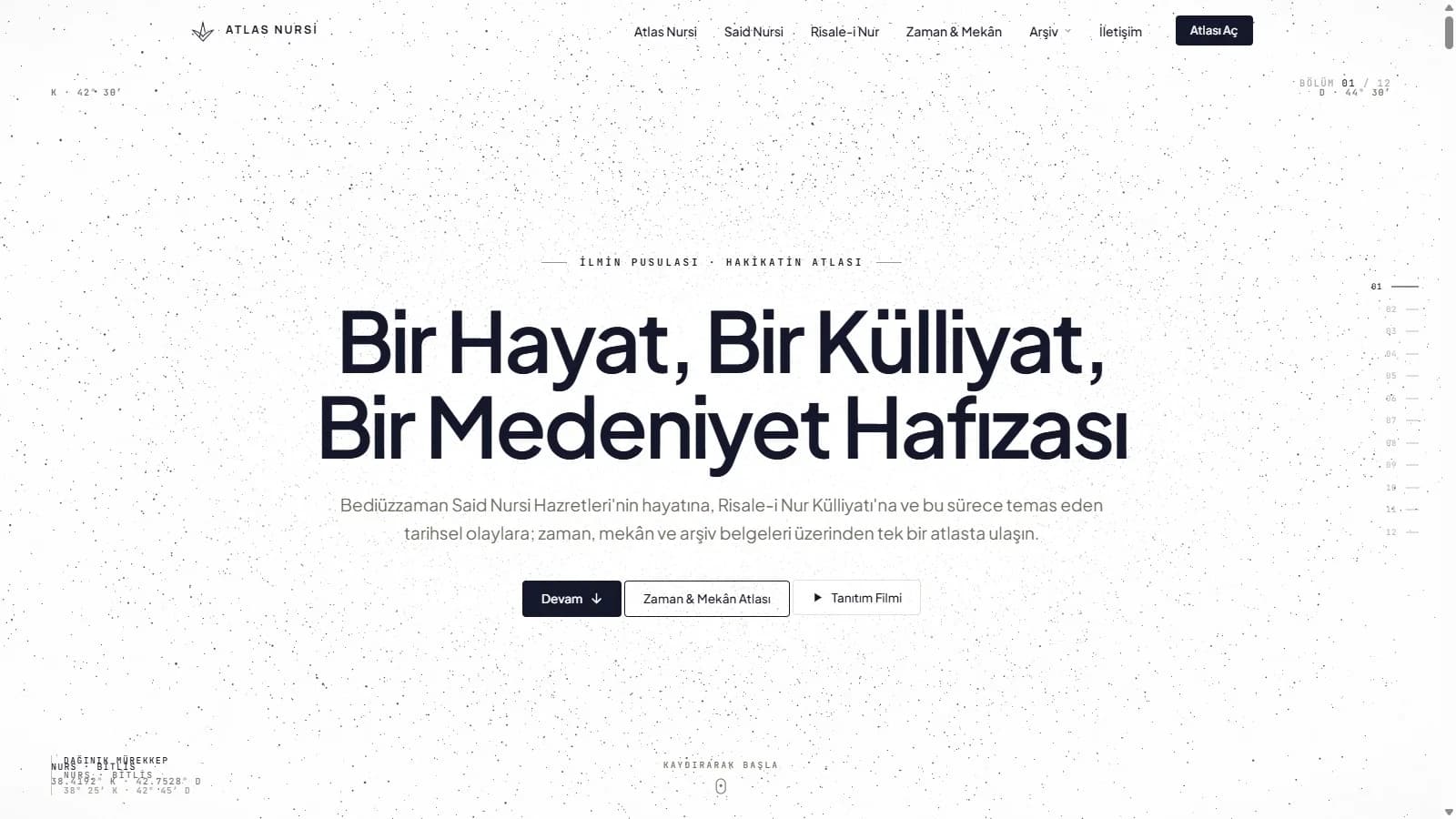
We have good news for those asking, “What happened to Atlas Nursî?”: the digital atlas that the Istanbul Foundation for Science and Culture has been working on for a long time has opened to visitors in a trial version. Atlas Nursî was conceived as a digital atlas bringing together the life of Bediuzzaman Said Nursi, the Risale-i Nur Collection, and the historical events of the period through time, place, and archives. During the trial period, it can be explored at test.atlasnursi.com.
What does the atlas contain?
The atlas is built around the idea of “One life, one collection, a memory of civilisation.” The Life Journey section follows Bediuzzaman’s life across six periods:
- A life beginning in the village of Nurs; his early education from his family and his turn towards learning at a young age
- Studies continuing from one madrasa to another; the pursuit of evaluating classical and modern sciences together
- The Istanbul years, the sermon in Damascus, and experience at the front; a stance directly involved in the concerns of society
- Exile in Barla: the place where a large part of the Collection was born; solitude transformed into an opportunity for authorship
- Trials held one after another and compulsory places of residence; service continued under restrictive conditions
- The spread of the works, the increase in the number of students, and the legacy left after his passing in Urfa in 1960
The Collection section features works such as The Words, The Letters, The Flashes, The Rays, İşârâtü’l-İ’câz, and Asâ-yı Mûsâ, with brief introductions. The Time & Space Atlas presents important events in his life, the writing processes of the works, and historical developments on a chronological timeline; interactive maps show the cities where Bediuzzaman lived, places of exile, and significant locations. Students, scholars, and other figures whose lives intersected with his are also presented with biographical information in the “People” section.
The archive collection brings together photographs, letters, manuscripts, and historical documents in a digital archive format; each document, text, photograph, and event is recorded with citation details in accordance with academic references.
How does it work?
Atlas Nursî is built on a “relational data model”: events, people, works, and places are modelled as interconnected, making it possible to move from a letter to the city where it was written, and from there to the events of that same year and the people who witnessed them. Four perspectives complement one another: citation details (text and document), place (map), time (chronology), and person (biography).
The project’s logo also summarises this approach: the pointed form at the top is a compass needle guiding towards truth; the two wings below represent an open book, symbolising that Risale-i Nur and the archives are open to everyone. “The compass of knowledge, the atlas of truth.”
About the trial version
The version currently available is a trial release: content, maps, and chronologies are continuing to be added; some sections may be incomplete, and the design and functionality may change over time. Our aim is to make the atlas an open resource for researchers, academics, students, and curious readers. We therefore value your feedback: if you notice a missing document, a date that needs correcting, or a subject to which you would like to contribute, you can contact us through the atlas’s contact page or via our foundation.
Knowledge deepens when it is shared. To explore Atlas Nursî: test.atlasnursi.com
Related content
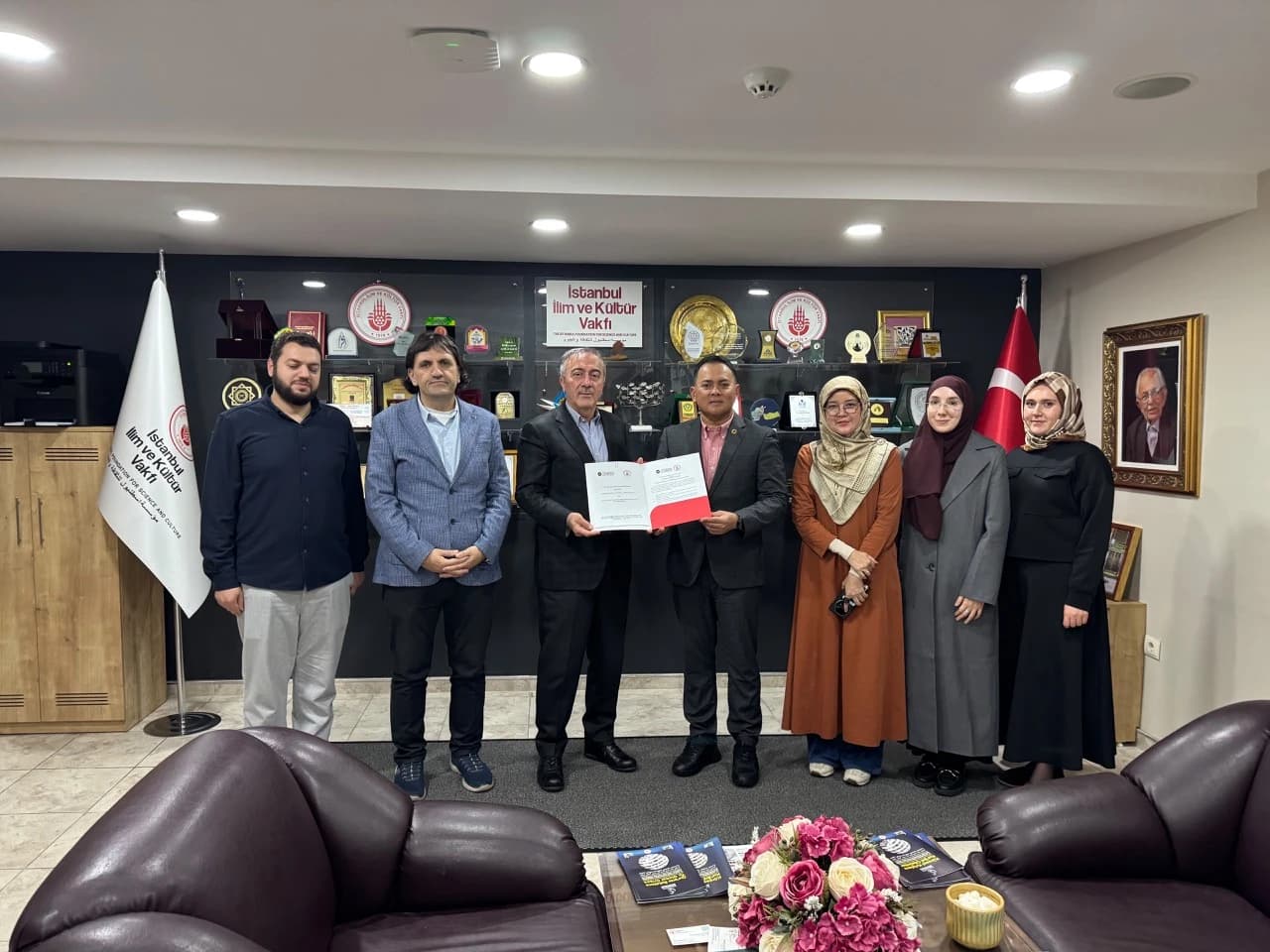
IIKV Signs a Letter of Intent for Cooperation with UniSZA, One of Malaysia’s Long-Established Universities
The Istanbul Foundation for Science and Culture (IIKV) signed a Letter of Intent with Universiti Sultan Zainal Abidin (UniSZA), one of Malaysia’s long-established universities, to develop academic, cultural, and scientific cooperation. Effective from 2 November 2026, the letter was signed on behalf of UniSZA by its Rector, Prof. Dato’ Dr. Fadzli bin Adam, and on behalf of IIKV by Dr. Said Yüce.