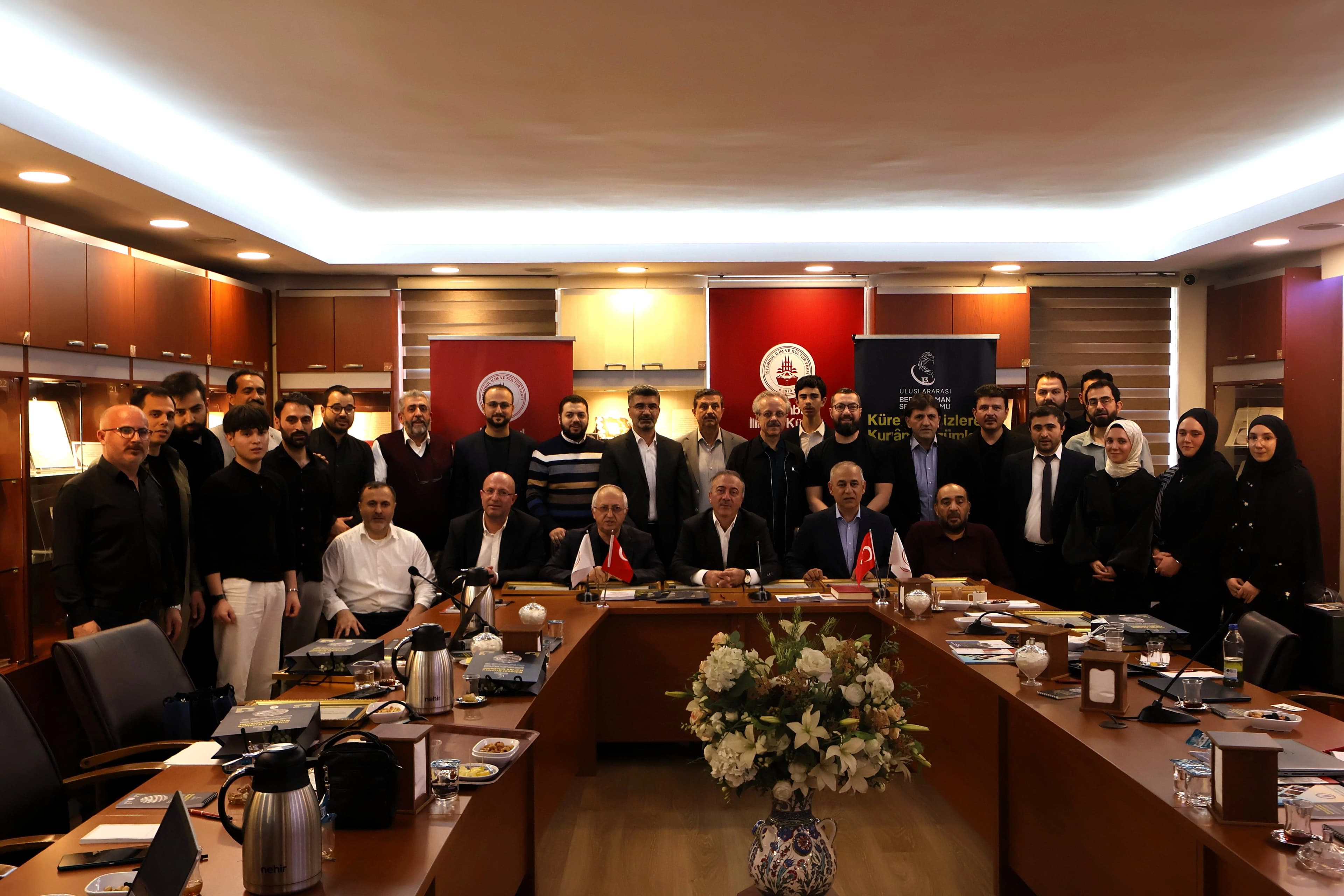
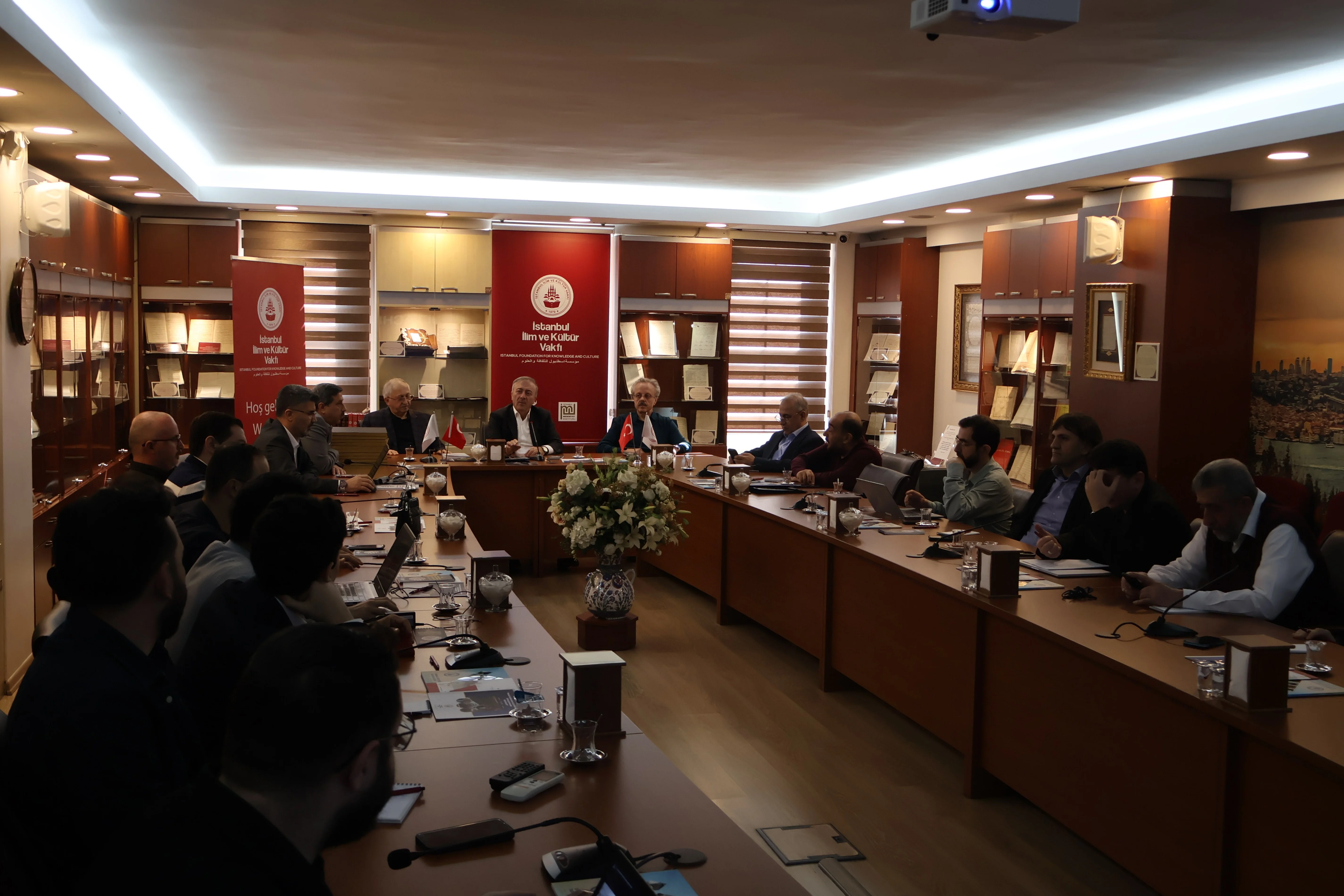
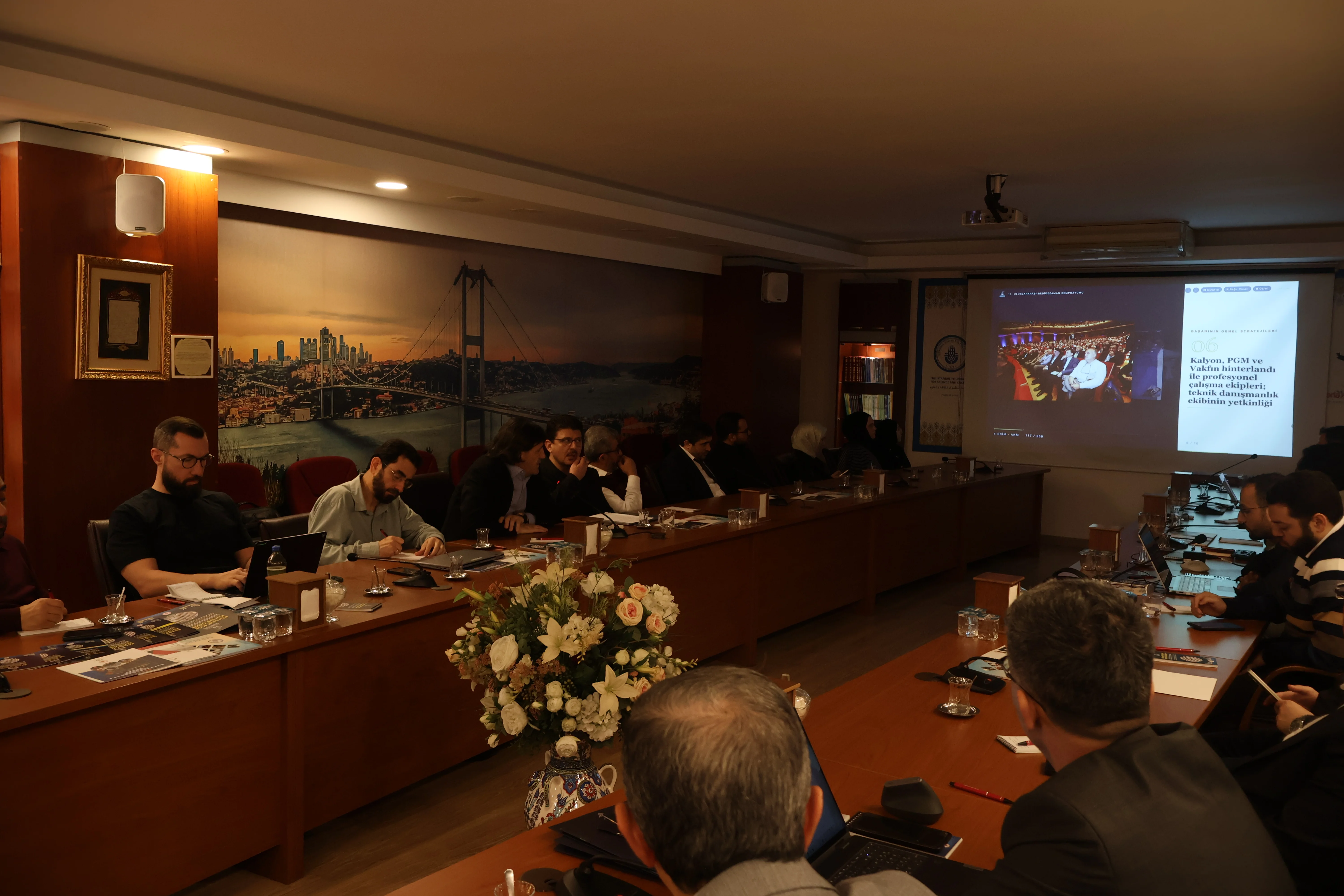
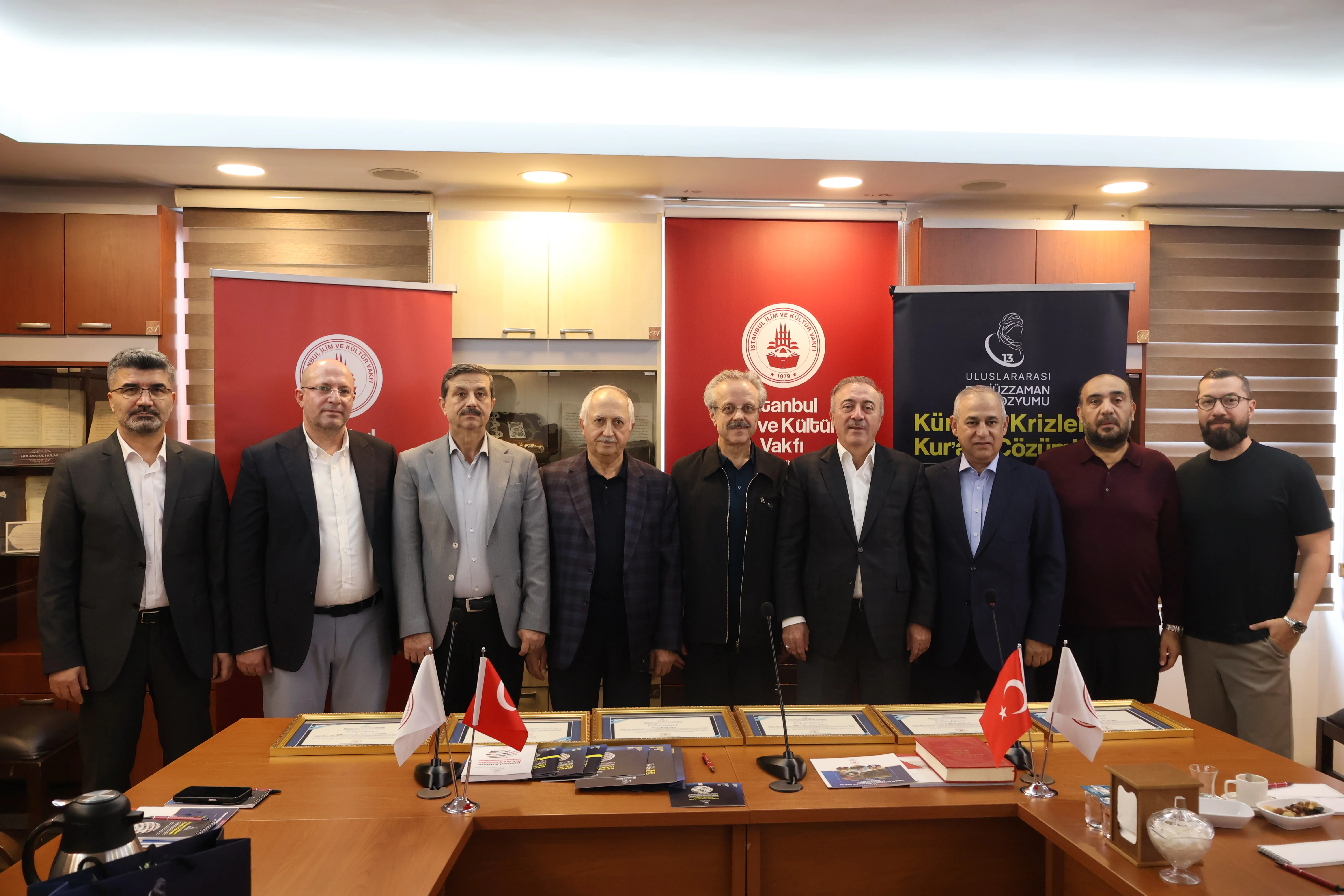
At the Istanbul Foundation for Science and Culture (IIKV), the outcomes and international impact of the 13th International Bediuzzaman Symposium, along with its goals for the coming period, were shared with the Board of Trustees. The meeting highlighted the symposium’s contributions to strengthening fellowship and affection in the Islamic world, raising academic awareness of the Risale-i Nur, and advancing the foundation’s institutional work.
The meeting also focused on developing new projects based on the symposium experience, strengthening international cooperation, supporting the academic and professional development of young people, and ensuring the sustainability of the foundation’s institutional activities.
The symposium’s success strategies and overall outcomes were assessed
Ünal Akyüz provided information about the success strategies and overall outcomes of the 13th International Bediuzzaman Symposium. He noted that current topics such as artificial intelligence, family, art, wars, and the economy had increased interest in the symposium, and that the forums on artificial intelligence had attracted particularly strong interest.
He emphasized that, alongside the support of the Board of Trustees and its confidence in foundation staff, strong communication established with different communities and sister foundations, consultations with Western academics and the Arabic Scientific Committee, and sound relations established with government and political institutions had all contributed to the symposium’s success. He also stated that professional work carried out with Kalyon, PGM, and the foundation’s circle of partners, the competence of the academic coordination committee, the contributions of volunteers, and the unifying and motivating leadership of Foundation President Said Yüce had played an important role in its success.
Referring to the symposium’s overall achievements, Akyüz stated that the event had strengthened unity and affection among the Islamic world and Risale-i Nur students, and reinforced IIKV’s academic and international mission. He also noted that it had helped bring Bediuzzaman Said Nursi and Risale-i Nur back into public discussion in Türkiye and around the world, and enabled their messages to the Islamic world to resonate with wider audiences.
Akyüz also shared objectives for the coming period, emphasizing the need to develop the symposiums as a global platform, increase academic cooperation with universities, and strengthen the foundation’s international activities. In this regard, he drew attention to the importance of expanding IIKV’s physical capacity, re-establishing its English-language unit, and growing its Arabic-language unit.
Mustafa Tuna explained that he became involved in the symposium’s work through the translation of its website into English. Noting that the English-language papers had come predominantly from Islamic countries such as Indonesia, Bangladesh, and Pakistan, Tuna emphasized that previously established collaborations and ongoing relationships had made a significant contribution to the symposium’s success.
Drawing attention to the need to increase participation from the Western world, Tuna stated that the West should not be viewed as consisting only of non-Muslim communities, since significant Islamic communities exist in these regions. He noted the importance of continuing professional outreach efforts to reach these communities.
Tuna recommended that invitations be sent at least one year in advance to secure the participation of prominent scholars in future symposiums, and said that it would be beneficial to include practical programmes such as workshops alongside academic papers.
Arabic-language papers and international diplomatic participation
In his assessment of the work of the Arabic-language unit, Abdurrahman Seyitoğlu noted that Arabic-language papers had come not only from Arab countries, but that submissions had also been received from various other countries, including Pakistan, Indonesia, Spain, and Switzerland.
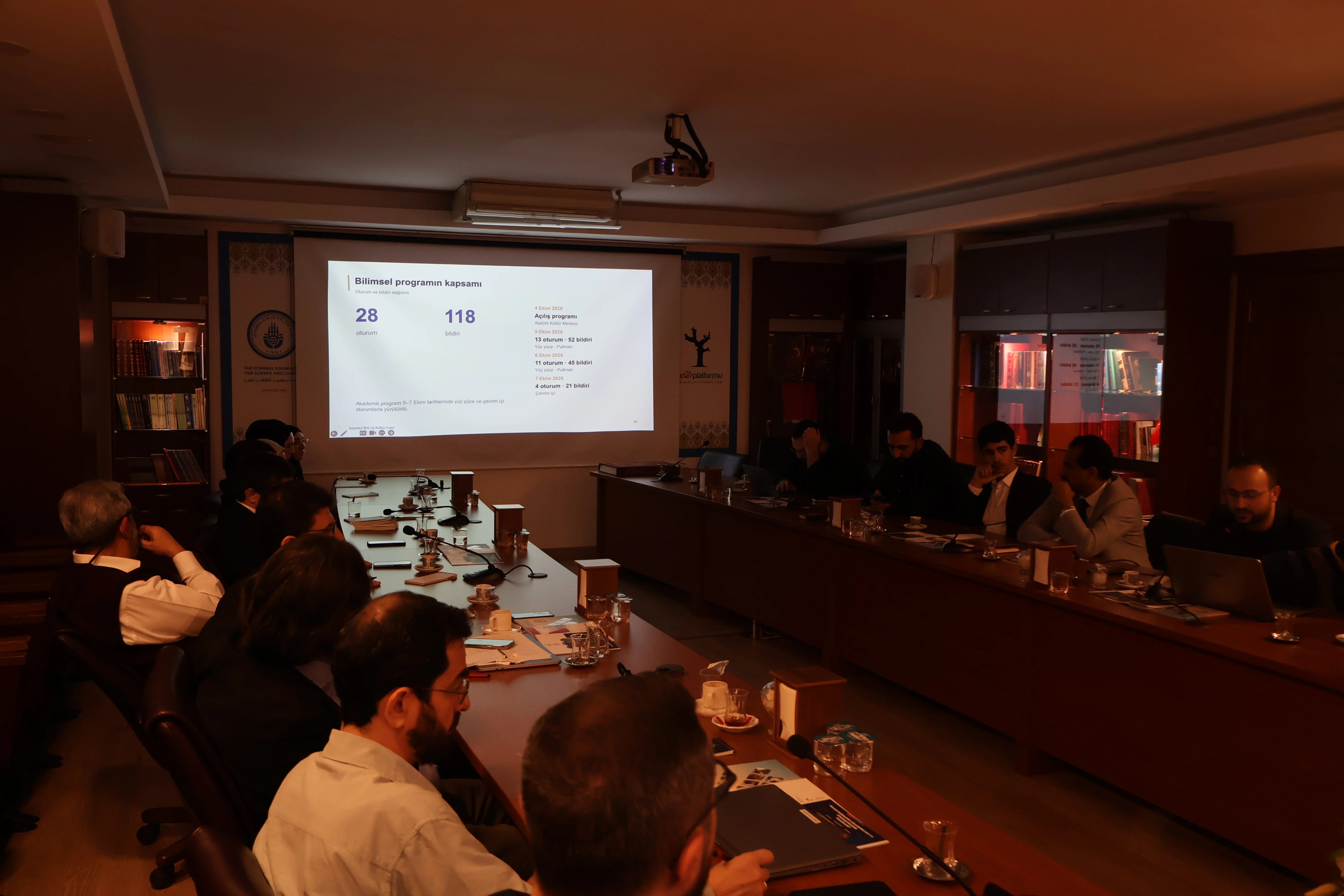
Seyitoğlu reported that approximately 400 papers had been received in Arabic, noting that those from Türkiye, Iraq, Syria, and Egypt made up a significant proportion. He stated that 118 papers had been presented as part of the symposium and that both in-person and online sessions had been held.
Emphasizing that the symposium had also attracted interest from diplomatic circles, Seyitoğlu said that prominent figures, including Syria’s Minister of Awqaf, the former prime minister of Morocco, and rectors of various universities, had attended the programme. He reported that Syria’s Minister of Awqaf had said he would share the symposium’s findings in Syria and make every effort to have Risale-i Nur published there.
Seyitoğlu noted that the symposium had also received extensive coverage in the Arab media, with reports published in various outlets, including established news organizations such as Al Jazeera.
The symposium’s media visibility reached millions
Hulusi Oflaz shared information about the symposium’s media and promotional activities. He noted that a unified institutional language and visual identity had been used in Turkish, Arabic, and English, and stated that promotional activities had been extended to various locations across Istanbul.
Oflaz reported that advertising campaigns on Marmaray, tram, and high-speed train lines had continued for a month after the symposium, and said that social media posts by figures such as Dursun Ali Erzincanlı, Serdar Tuncer, Ömer Demirağ, and İhsan Şenocak had contributed to the event’s visibility.
Oflaz stated that the symposium’s content had received a total of 5 million views and that 104 news reports had been published on 58 different websites. He noted that efforts to promote the symposium through additional media outlets would continue.
IIKV signals support for new projects
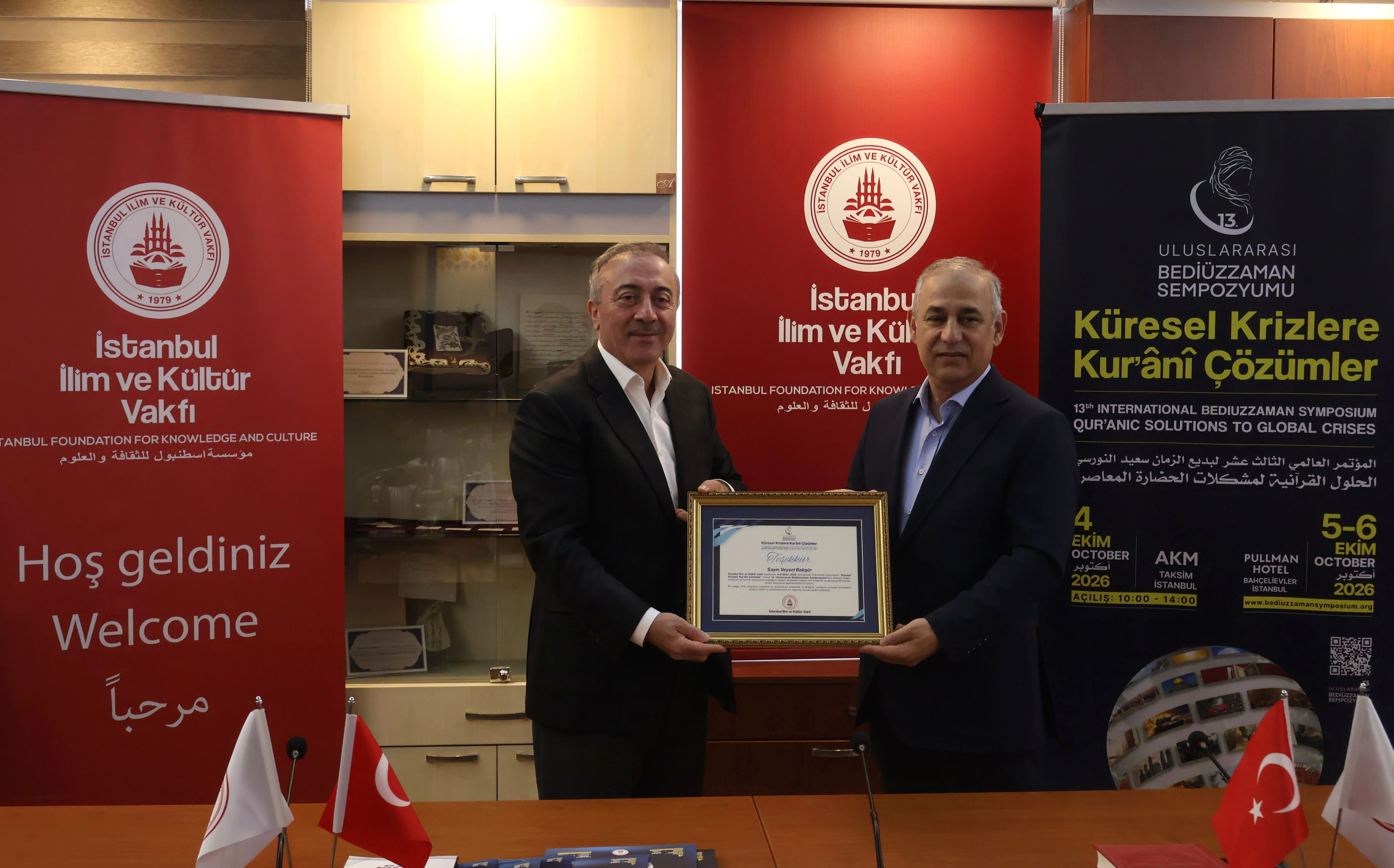
In his address to foundation staff and project teams, Veysel Bakgör encouraged the development of new projects and stated that they were ready to provide financial support. Emphasizing that the team, united around a common goal and purpose, acted in a spirit of brotherhood, Bakgör noted that staff could take on significant responsibilities in the foundation’s future.
Bakgör stated that the symposium was not merely an academic event, but also an important gathering that brought together Risale-i Nur students who had been serving for many years, and said that this work should continue. Drawing attention to how the symposium had strengthened affection, energy, and fraternity, he suggested that national and international activities could be organized as separate programmes.
Bakgör also stated that it could be beneficial to bring back into the work those who had played active roles in past services, and to organize regional symposiums in countries such as Indonesia.
The contribution of volunteers and the development of young people
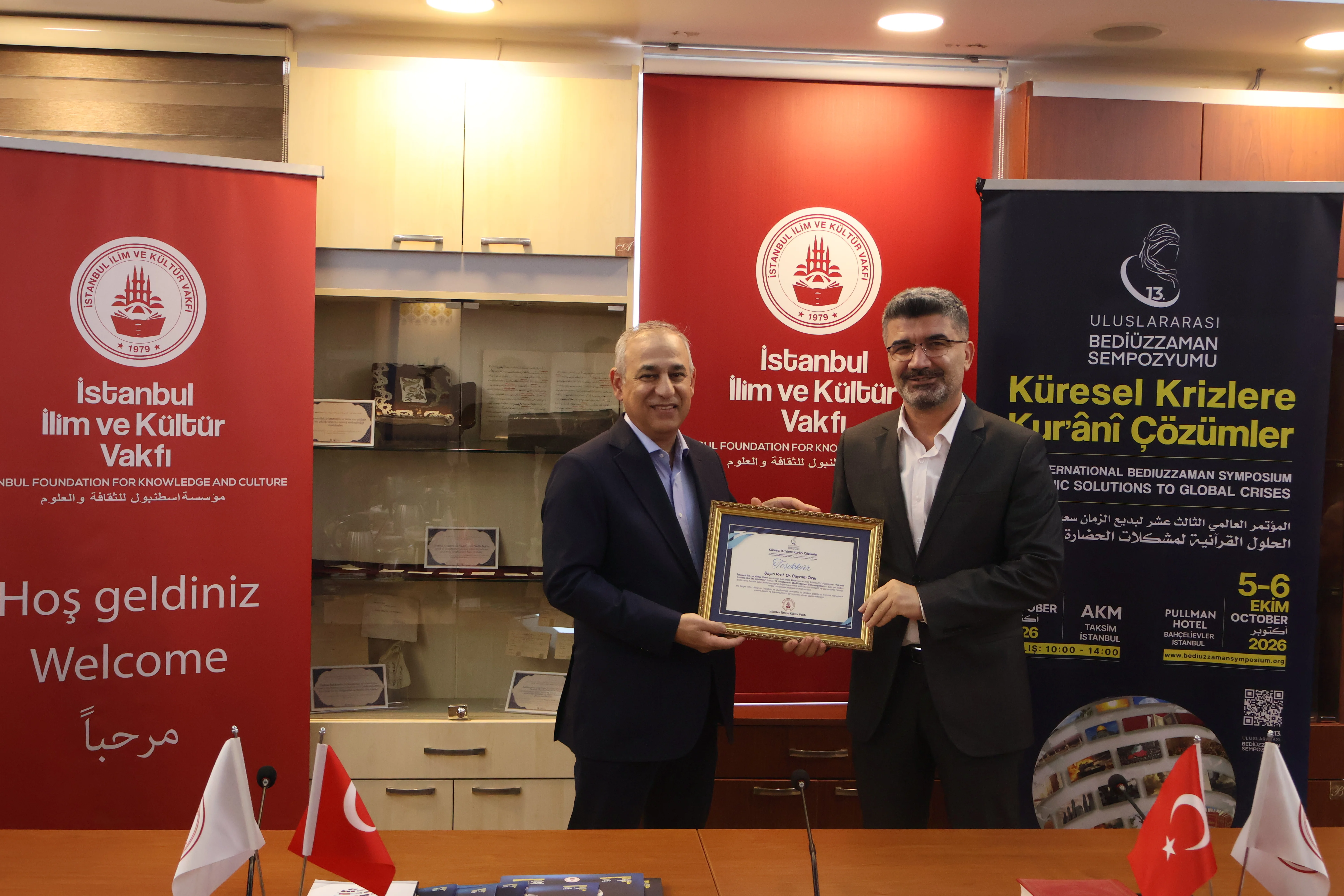
Bayram Özer thanked everyone who had contributed to the successful completion of the symposium and drew attention to the professional work of the volunteer team. Özer proposed that volunteers who had served at an international event be given certificates of participation, noting that these would enhance young people’s CVs. He also raised the idea of examining, through an academic study, how volunteers were incorporated into the organizational process and turning this into a systematic model.
Medine Okur provided information about the allocation of tasks to volunteers and their work processes during the event. Reporting positive feedback from young people about the symposium’s professional organizational structure, Okur said that some had described IIKV as “An institution that understands me.”
Zehranur Sarıoğlu, who served on the symposium’s media team, expressed her satisfaction at being part of the event and thanked everyone who had contributed. Rüvaydanur Şafaklar also thanked everyone involved and stated that she would be working in IIKV’s English-language unit.
Rıfat Fidan thanked the Board of Trustees for their efforts and expressed his satisfaction that the symposium had been completed successfully and without any problems. Fidan emphasized the importance of supporting young people’s academic and career development through the “Young Executive” initiative.
New steps to bring Risale-i Nur to the academic world
Mehmet Ali Gündoğdu drew attention to two important achievements of the symposium. He stated that the first was its contribution to strengthening fraternity and affection in the Islamic world, and the second was taking an important step toward increasing recognition of Risale-i Nur in the academic world.
To this end, Gündoğdu proposed developing collaborations with higher education institutions such as Yıldız Technical University, Ibn Haldun University, Bitlis Eren University, and Süleyman Demirel University. He stated that academic partnerships between IIKV and universities would contribute to research on Risale-i Nur and to advancing this work on an institutional basis.
Said Yüce also emphasized the need to set new objectives following the symposium and build on its achievements. He stated that the symposium had contributed to unity among Risale-i Nur students and helped overcome disagreements between different groups.
Yüce noted that the interest shown in the symposium by state officials had helped overcome prejudices, and said that IIKV’s institutional identity needed to be strengthened and its work made sustainable. He also drew attention to the importance of developing dedicated projects to bring Risale-i Nur to wider audiences and promote its study in the Western world.
The Symposium strengthened the sense of brotherhood and unity in the Islamic world
Tarık Sağlam described the symposium as an important gathering where people from different countries came together in a sincere atmosphere, recalling the idea of Islamic Unity.
Relaying the words of Dr. Yusuf from Erbil, who visited our foundation after the symposium, Sağlam stated that Dr. Yusuf had considered Islamic Unity impossible before the symposium, but said that after witnessing the sincere atmosphere created at the event, his belief that it could be achieved in the near future had grown stronger.
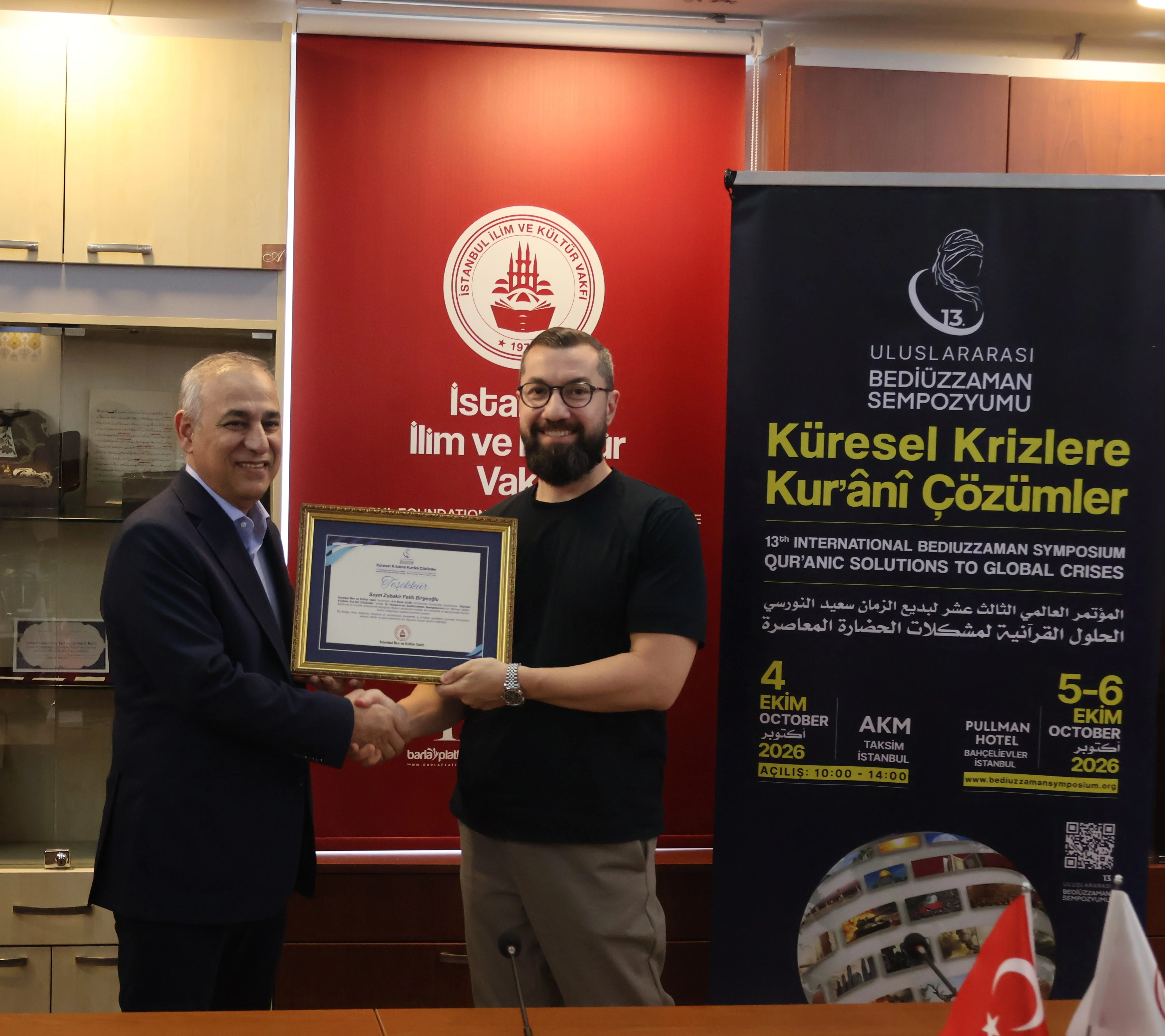
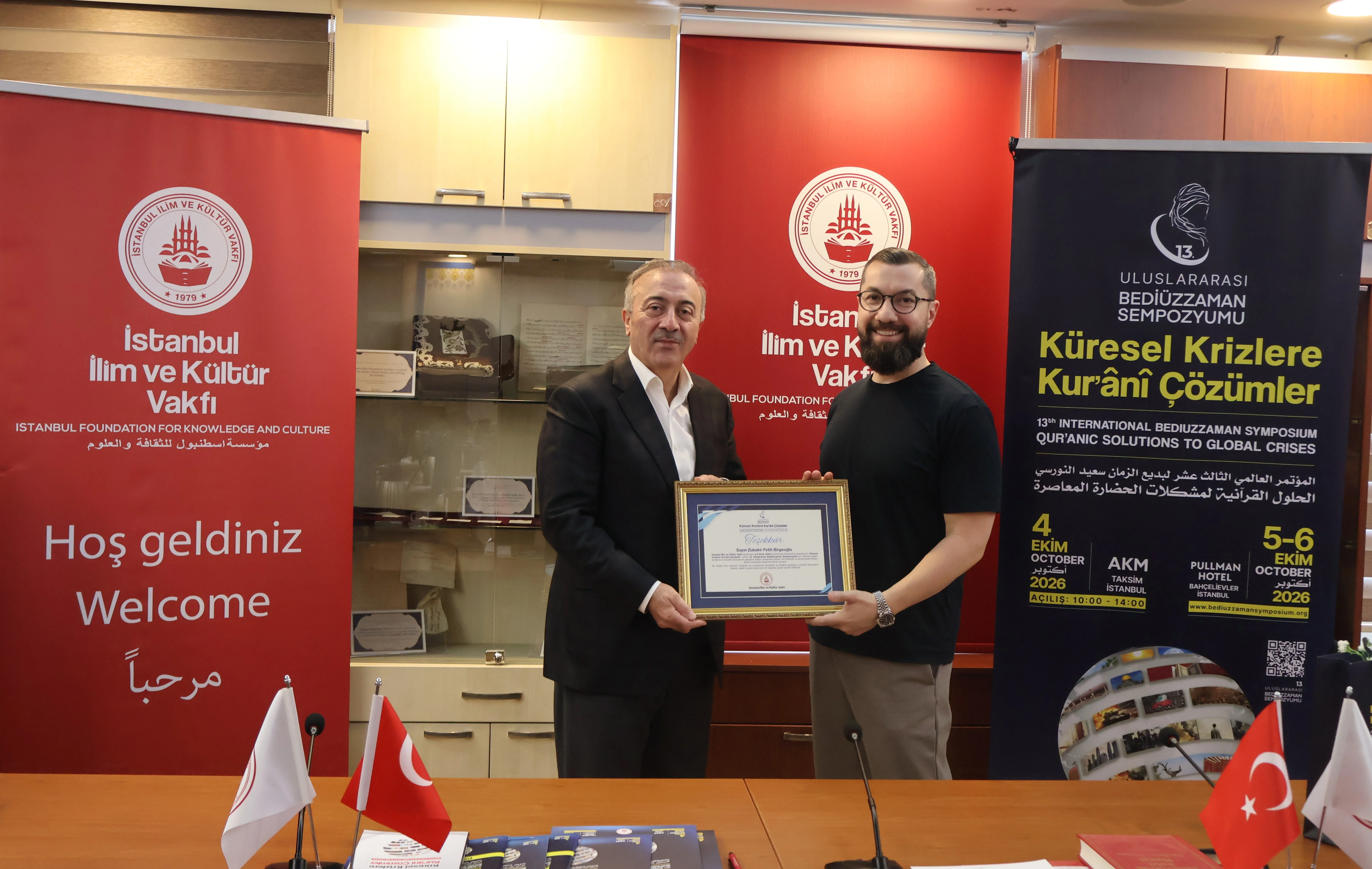
Zübeyir Birgeoğlu thanked everyone who contributed, emphasizing that all those involved in preparing the symposium worked with dedication and without self-interest. Noting that the work should continue with the same enthusiasm and determination, Birgeoğlu pointed out that expectations for the next symposium would be higher.
New goals for the coming period
Those who spoke at the meeting shared their views on the need to make the symposium’s achievements lasting and support them with new projects. Zahid Koçbay noted that IIKV is known among Risale-i Nur students as an institution that organizes international symposia, and proposed that similar initiatives be carried out effectively within the country as well.
The discussions highlighted the need to address national and international events through separate programmes, expand initiatives aimed at the Western world, organize regional symposia in different countries, develop academic partnerships with universities, and strengthen projects focused on educating young people.
The review meeting held after the 13th International Bediuzzaman Symposium demonstrated that the symposium was not merely an academic gathering; it was also an important initiative that strengthened bonds of brotherhood, fostered communication between different regions, and helped create a broader platform for the academic study of Risale-i Nur. The views shared at the meeting reflected a shared determination to build on the achievements through new projects and to continue IIKV’s work at the national and international levels with resolve.
Related content
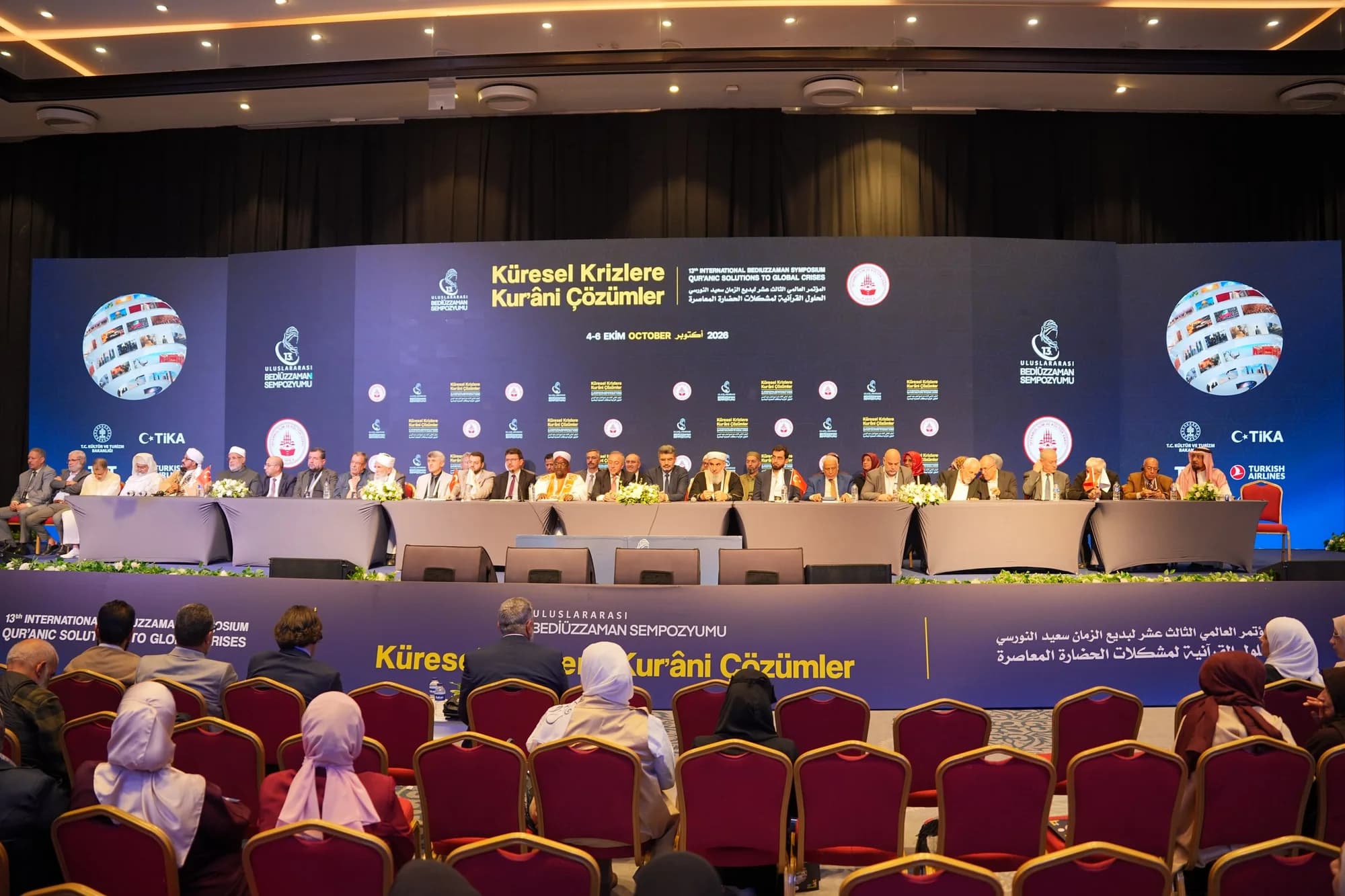
Appendix to the 13th International Bediuzzaman Symposium Published
The appendix to the 13th International Bediuzzaman Symposium brings together notes from the gathering, the speakers’ reflections and recollections concerning the service of the Risale-i Nur.
Session 68: Building a Just and Prosperous Society
13th International Bediuzzaman Symposium, 7 October 2026, Online. Languages of presentation: English, Indonesian, Tagalog. Video recording of the session and working transcripts.
Session 67: Qur’anic Responses to the Crisis in Society, Politics and the Family
13th International Bediuzzaman Symposium, 7 October 2026, Online. Language of presentation: Turkish. Video recording of the session and working transcripts.
Session 66: Finding Meaning in a Changing World
13th International Bediuzzaman Symposium, 7 October 2026, Online. Language of presentation: English, other presentations. Video recording of the session and working transcripts.