The appendix to the 13th International Bediuzzaman Symposium brings together notes from the gathering, the speakers’ reflections and recollections concerning the service of the Risale-i Nur.
(Some Notes from the 13th International Bediuzzaman Symposium)
Our dear, faithful brothers
As our Master, may God sanctify his mystery, said in the Kastamonu Lahikası:
“May you live long and be blessed. Your very earnest endeavour and effort kindle enthusiasm and zeal both here and elsewhere. Endless thanks be to Almighty God that the conquests of the Risale-i Nur are increasing day by day. The people of faith feel their wounds and find their remedies in it…”
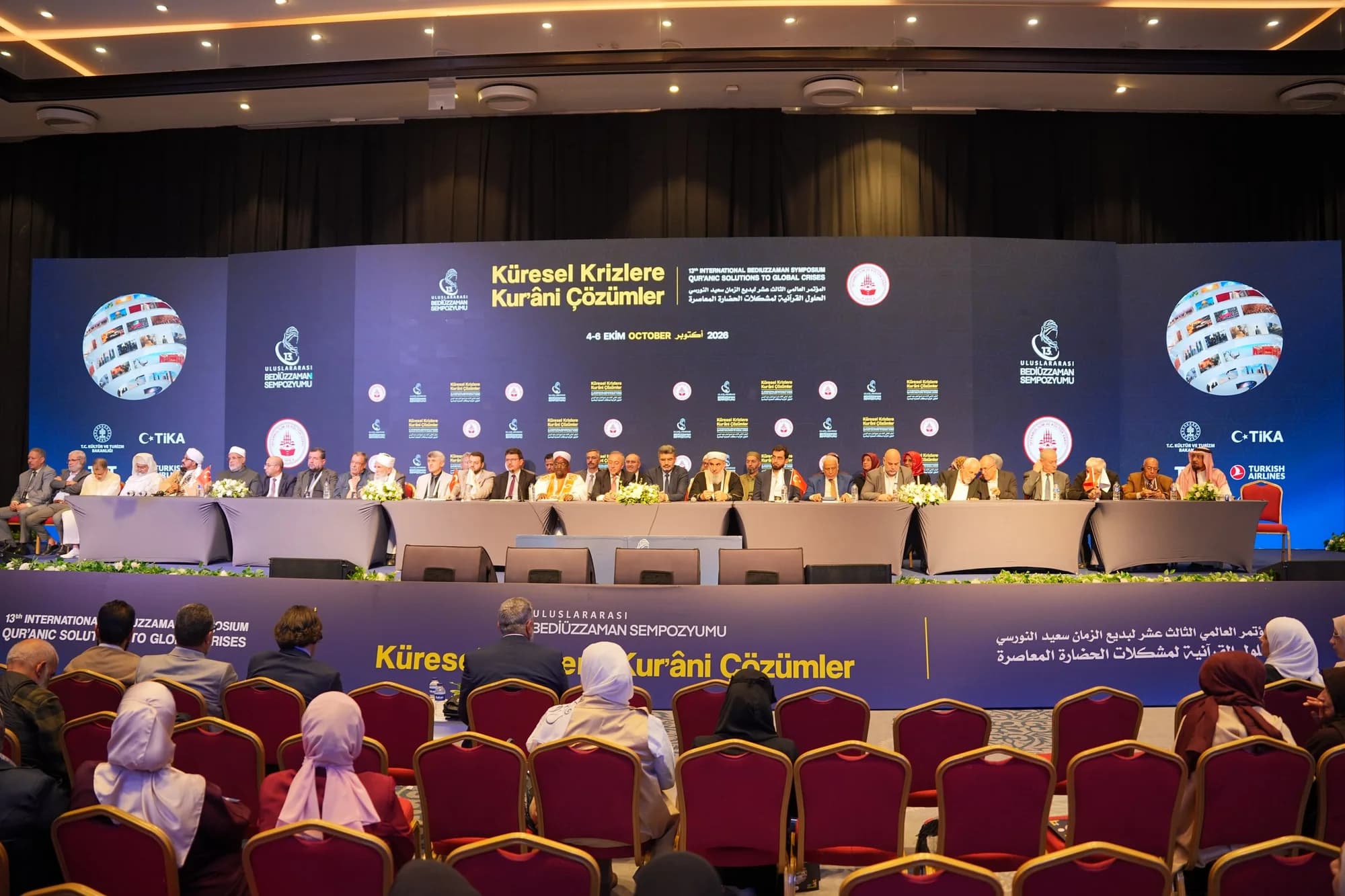
On this occasion, endless thanks be to Almighty God that, with the aim of presenting Qur’anic solutions to the material and spiritual crises through which the world is passing, we held the 13th International Bediuzzaman Symposium in Istanbul from 4 to 6 October 2026. At this gathering, attended by hundreds of participants from scholarly and academic circles in different countries, the issues of our age were discussed under the guidance of the Qur’an and the Sunnah, in the light of the principles set forth by the Risale-i Nur.
The 13th International Bediuzzaman Symposium has become an important platform for developing solutions to the problems facing humanity, continuing a historic tradition and bringing together national and international academics with global influence. In this context, following evaluation by the scientific committee, 262 papers were selected from 668 abstracts submitted by 448 institutions in 60 countries across five continents, and presented in sessions in Turkish, Arabic, English and Russian.
Within this scholarly tradition, which we sustain with the support and prayers of the students of the Risale-i Nur, we also remembered with gratitude and appreciation our Master Bediuzzaman Said Nursî and the elder brothers who devoted their lives to the service of faith. Guided by our Master’s statement, “In this age, the service of faith through the Nur is carried out everywhere by making it known and by drawing the attention of those in need,” we also sought to introduce the service and cause of the Risale-i Nur to national and international audiences. On this occasion, we listened to inspiring presentations on the effects of the service of faith in various countries.
Scholars from various regions of the Islamic world and learned people working at universities around the world spoke of the impact of the Risale-i Nur on their lives and countries. In these accounts from Syria, Iraq, Europe and America, we saw how the same Qur’anic truths found a response in different hearts. We hope that these recollections, which we will share with you, will prompt us to reflect anew on the value of the treasure in our hands and increase our zeal for service.
News from the lands of Syria
Dr. Muhammed Ebu’l-Hayr Şükri, Syria’s Minister of Religious Endowments, recalled the sermon delivered by Master Bediuzzaman at the Umayyad Mosque in his opening address. More than a century later, a scholar who had come to Istanbul from the land where that sermon was delivered invoked blessings upon our Master and shared this news: “The Risale-i Nur is once again being read in Damascus, Aleppo and all the other cities of Syria.” This news, united with the memory of the Hutbe-i Şamiye, was a cause of gratitude for us.
The truths of faith in response to the crisis of unbelief
Ebu’l-Hayr Şükri also attended the academic session entitled “Said Nursi as a Muslim Thinker” on the first day of the symposium. He noted that, while reading the works of various scholars, Bediuzzaman’s perspective, which presents Islam in its entirety, stood out. He then expressed his view in these words: “Against the materialism spreading throughout the world, I believe there is no remedy other than that found in the Qur’an’s pharmacy of Master Said Nursi.” As we listened to this statement, we realised what a great service we are engaged in through the works in our hands, in response to the crisis of unbelief in our age.
From the sciences to knowledge of God
In his opening address, our brother Fevzi Allahverdi, a veteran of the service of the Nur, also recalled the questions that have long intrigued humanity: “Where do you come from? Where are you going? What is your duty here?” He explained how Bediuzzaman answered, with rational and scientific proofs, the doubts directed at faith in this age. Saying, “He employs all techniques and sciences as means to faith,” he drew attention to how the sciences are put to service of knowledge of God in the Risale-i Nur.
The story of a book published half a century ago
The address by Prof. Dr. Ali Karadaği, President of the World Union of Muslim Scholars, reached back half a century in the history of the cause of the Risale-i Nur. In his opening address at the symposium, Karadaği said, “About half a century ago, I had the honour of publishing one of Bediuzzaman’s books and writing his biography.” He recounted that he published the work in Egypt and that it had a profound impact among researchers and thinkers. He then alluded to Bediuzzaman’s proposals in the Hutbe-i Şamiye for establishing Islamic unity and proposed an Islamic United Nations.
A gathering that strengthened hope for Islamic unity
The post-symposium reflections of Dr. Yunus Hoca, President of the Erbil Madrasah Association, were noteworthy. He explained that before the symposium he had considered the realisation of Islamic unity a distant possibility. He expressed how the gathering had strengthened his hope in these words: “I am now convinced that Muslim unity will be achieved very soon.”
Remedies from the truths of faith for the wounds of our age
English journalist and activist Lauren Booth drew attention to the fact that remedies for the crises of our age, drawn from the Qur’an’s pharmacy, are found in all the treatises of the Nur, particularly the Hutbe-i Şamiye. Noting that the present civilization is on its deathbed, she stressed that Bediuzzaman’s message is more urgently and indispensably needed today. Her words reminded us of the following statement by our respected brother Zübeyir Gündüzalp in a lecture he delivered at Ankara University: “The Risale-i Nur repairs that destruction with the diamond truths of the Qur’an, by the shortest and most direct path in the Qur’an, and treats—and will treat—those wounds with the medicines in the Qur’an’s great pharmacy.”
An invitation to read and understand
Speaking at the special session entitled “A Vision of Civilization in the New World Order,” Dr. İhsan Şenocak described our Master’s struggle against the wounds to faith inflicted by the sciences and philosophy of the age, and how his works address people of different ages. Saying, “He sacrificed himself to save the children of this nation who were being led into unbelief,” he placed the hardships endured by Bediuzzaman in the context of this service. Şenocak also spoke of the treatises on Sincerity and Brotherhood, and issued an appeal in these words: “The Ummah needs more than ever today to read and understand the treatises of the Nur by His Eminence Bediuzzaman.”
Viewing knowledge and profession from the perspective of the Hereafter
Dr. Rania Awaad, a professor of psychiatry at Stanford University School of Medicine, invited the audience at the “Revelation-Centred Society and Family” forum to reflect on the perspective through which we view success. This scholar, whose work focuses on the mental health of Muslims and Islamic psychology, explained that families must not be left to manage alone. She said that, alongside parents, families who share the same values and spiritual guidance also bear responsibility for a child’s upbringing. She then shared with us a question she had put to herself as a physician working at one of the world’s leading universities: “If, in the end, that diploma, that work, does not earn me eternal life, what is its use?”
Turning love into zeal and service
Hamza Andreas Tzortzis, known in the United States for his work on Islam and atheism and founder of the Sapience Institute, also focused on reaching people in need of the truths of faith at the “Social Issues of the Modern Age” forum. Tzortzis, who became a Muslim in 2002, explained that his father was from Athens and his mother from Cyprus. Recalling the path faith had opened in his own life, our guest remembered Bediuzzaman’s struggle against materialism through Qur’anic proofs. He said that, to follow his path, it is particularly important to reach young people with their questions and to speak with people with compassion and wisdom.
He concluded his address with this direct appeal: “Since you read Bediuzzaman’s treatises, do not be content to sit and talk only among yourselves; take action at once and convey these truths to those in need!”
Hope blossoming in a Russian teacher’s classroom
Alongside the statements of a learned person, the recollection shared by a Russian teacher also showed how the truths of the Risale-i Nur can touch a person’s life. Speaking on the evening of the symposium’s second day in the great hall where all the guests had gathered, Vladimir Semyonoviç Yojikov said that he had been engaged in education for forty years and recounted a providential favour he had received through the Risale-i Nur during that time.
He would hand out blank sheets of paper to his students and ask, “What do you expect from life?” One day, he was deeply shaken by the response of a sixteen-year-old student. The young person said that his mother treated him like a stranger and declared, “I am completely alone in this world.” The student had withdrawn from people and begun seeking solace in alcohol. Yojikov said that his heart broke when he read the paper, and that the providential help he had been seeking came through the Risale-i Nur—a lesson from the Qur’an for the understanding of this age—delivered to him by a student of the Nur. He said that, as the Nur lessons continued, he saw a glimmer in his students’ eyes and hope in their demeanour. This change in the young people’s inner lives gave him the resolve to continue the lessons. He then recounted how he went to the student of the Nur who had first brought him the treatises and said: “Do you think this was you? No. It was Bediuzzaman Said Nursî who came.” This was how he described the service of our Master, who had reached that classroom through his works. The lesson continued by a student of the Nur had found a response in the lives of a teacher who had never met him and of the young people.
So this was the fruit of the lessons read and madrasahs opened in other countries. The journeys made to teach, the books opened together and the conversations continued with patience would, in the future, become a means of salvation for many people and be remembered with gratitude.
A life transformed by a changed view of existence
Dr. Yamina Bouguenaya’s account, in turn, offered a glimpse into the window the Risale-i Nur had opened in the life of a scholar. She completed a doctorate in physics in England, lived in Türkiye and later continued her studies on the Qur’an and Islamic sciences in America. She taught Arabic and Islamic sciences at various universities. As head of the organisation Receiving Nur, she sought to share the wisdom of the Qur’an with people. In her presentation in English, while explaining the meaning of the letter-based perspective, she reflected on her own life: “My life changed when I first encountered the works of Bediuzzaman.” She explained this change as seeing one’s life and abilities not as one’s own property, but through the meaning of the letter-based perspective, as a trust from the Creator.
I am a servant…
The recollection of researcher İbrahim Ahmed Ömer, who came from Iraq, offered an example from everyday life of this formative aspect of service. He said that he began reading the Risale-i Nur after attending the Arabic Academics programme in 2011, and that the writings he had been producing since 2019 under the title “My Life with the Nur” had grown to four volumes. He also endeavoured to share the truths he read with his brothers through Arabic and Kurdish voice messages. He then spoke of a young man he had met at a Nur madrasah in Istanbul. He had first seen him working in the kitchen. Later, at a crowded meeting, he saw the same young man reading the Risale-i Nur.
He had teased the young man, “You were the kitchen manager, and now you’re chairing a session!” The reply was brief: “I am a servant, only a servant.” The recollection shared by İbrahim Ahmed Ömer was a vivid example of the impact of living and conversing together on the formation of character. He did not give the young man’s name. But the service he performed and his reply stayed in the memory of our guest, who had come from a distant country. By combining work in the kitchen with reading a lesson from the platform, he had become a living example of sincerity and brotherhood.
Listening to someone’s troubles…
The English-language workshop also discussed the responsibility involved in listening to someone and offering spiritual support. Dr. Mahshid Turner of the International Muslim Theology Foundation in the United Kingdom described a six-step approach based on the Risale-i Nur. She spoke of examining one’s own self while listening to others, considering the meanings of the Divine Names in the events being experienced, and helping the person recognise the truth.
Loyalty to our Master’s cause and method
Our brother Prof. Dr. Şener Dilek gave examples of how our Master upheld the cause of the Qur’an in this age. One of our brothers had asked a Muslim doctor living in America, “There is a person in Türkiye called Bediuzzaman Said Nursî. Do you know him?” The doctor stood up and replied: “I am not such an indifferent Muslim that I would not know Said Nursî.” He also recalled these words, which he said Necip Fazıl had uttered in a conversation: “At a time when everyone had silenced their tongue and broken their pen, there was a single pen writing and a single tongue speaking. That was Bediuzzaman Said Nursî.” He also cited Cemil Meriç’s assessments of Bediuzzaman. When asked about his statement that no great figures of Islamic thought had emerged since the Tanzimat, Meriç had replied: “None have. There is Said Nursî. I know no other man worthy of respect… When I say ‘Muslim thinker,’ I know him for his courage and valour; I know no other.”
Our brother said that, alongside the Master’s cause, his method and approach must also be known. He spoke of his method of love and the principle of positive action. Then, drawing attention to the importance of the collective spiritual personality, he made this observation: “The Risale-i Nur is not a person-centred service. The Risale-i Nur is a service centred on reading. Today, throughout Anatolia and in many places around the world, the Risale-i Nur study circles and tables of knowledge continue day and night, 24 hours a day.”
The Nurs reaching the world from the village of Barla
Our brother Sabri Okur recalled the studenthood of the Risale-i Nur, saying, “We are all servants and we are all students.” He then turned to Barla. According to the recollection he shared, as the first treatises were being written, the question of who would read these works crossed the heart of our brother Şamlı Hâfız Tevfik. In a village where neither birds flew nor caravans passed, the Master dictated and his student wrote. Our Master’s reply was: “I will have these works read throughout the universe.”
We recalled that question asked in Barla at the gathering where we had also heard a Russian teacher’s gratitude. Across the years and borders that had passed, researchers and scholars from all over the world bore witness to the flourishing of this service. The statements of a scholar from Damascus, a physician in America and a researcher educated in England converged in the same truths of faith. Each brought news from their own life and country.
Dear brothers, this glad news increases our gratitude and strengthens our zeal to read and have others read the works in our hands. Let us conclude our words with what our Master said: “The duty of every student is not only to save their own faith; rather, they are also charged with safeguarding the faith of others. This is achieved through earnest and continued service.”
May Almighty God employ us with sincerity in the service of the Qur’an and faith, and make our enthusiasm and devotion enduring. Amen. We send our greetings to all our brothers, one by one.
Your brothers
Download the Turkish Word file of the Addendum
Explore the archive of the 13th International Bediüzzaman Symposium
Related content
The 13th International Bediuzzaman Symposium Evaluated by the IIKV Board of Trustees
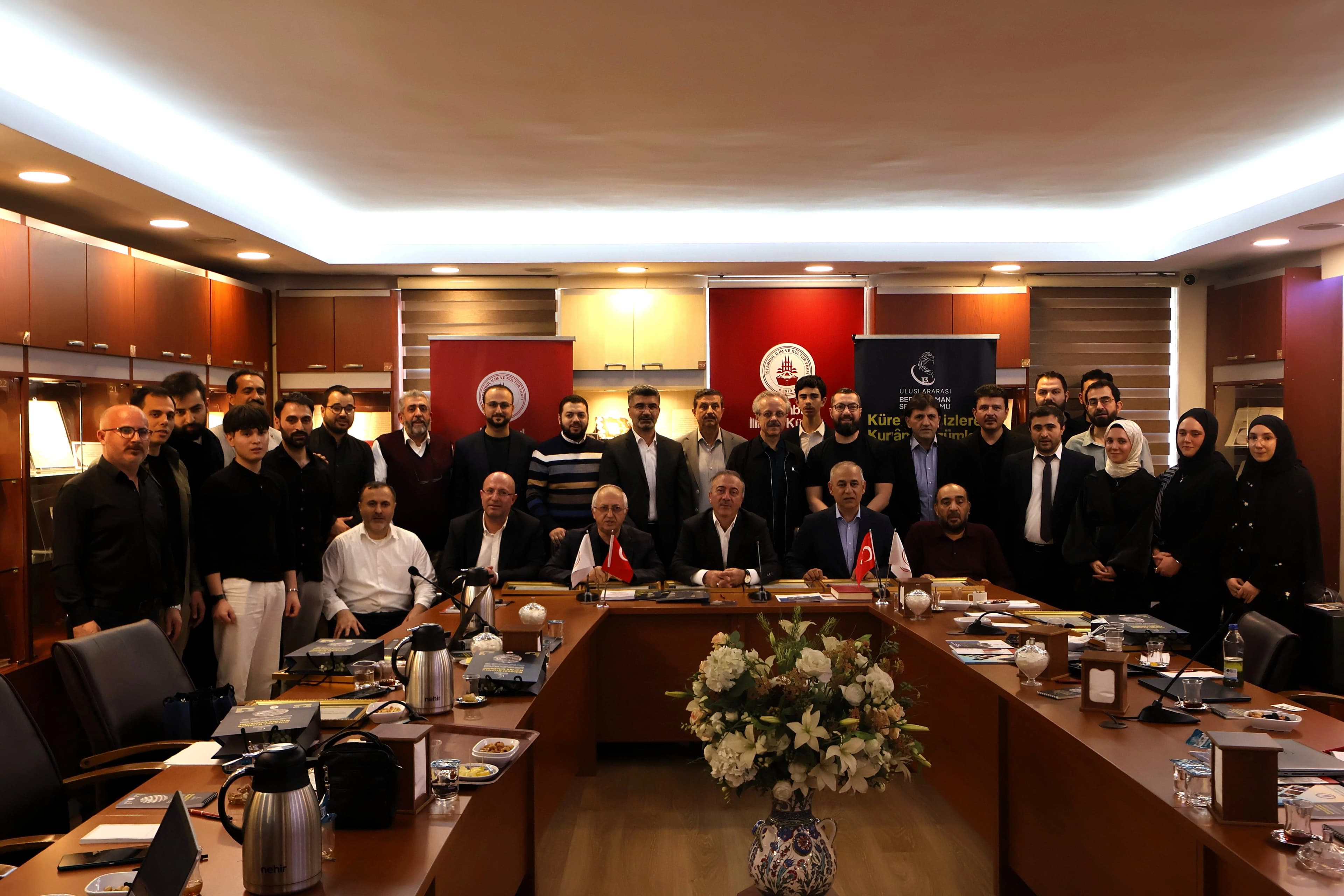
At the Istanbul Foundation for Science and Culture (IIKV), the outcomes and international impact of the 13th International Bediuzzaman Symposium, along with its goals for the coming period, were shared with the Board of Trustees. The meeting highlighted the symposium’s contributions to strengthening fellowship and affection in the Islamic world, raising academic awareness of the Risale-i Nur, and advancing the foundation’s institutional work.
Session 68: Building a Just and Prosperous Society
13th International Bediuzzaman Symposium, 7 October 2026, Online. Languages of presentation: English, Indonesian, Tagalog. Video recording of the session and working transcripts.
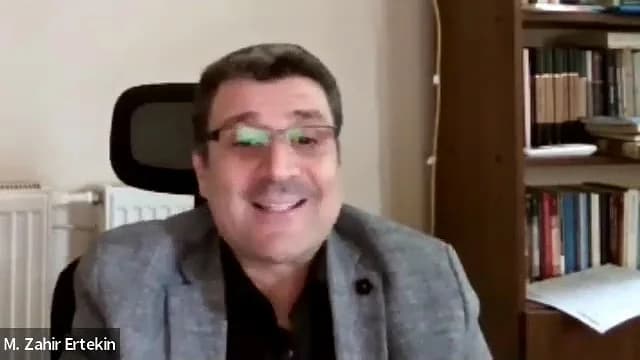
Session 67: Qur’anic Responses to the Crisis in Society, Politics and the Family
13th International Bediuzzaman Symposium, 7 October 2026, Online. Language of presentation: Turkish. Video recording of the session and working transcripts.
Session 66: Finding Meaning in a Changing World
13th International Bediuzzaman Symposium, 7 October 2026, Online. Language of presentation: English, other presentations. Video recording of the session and working transcripts.