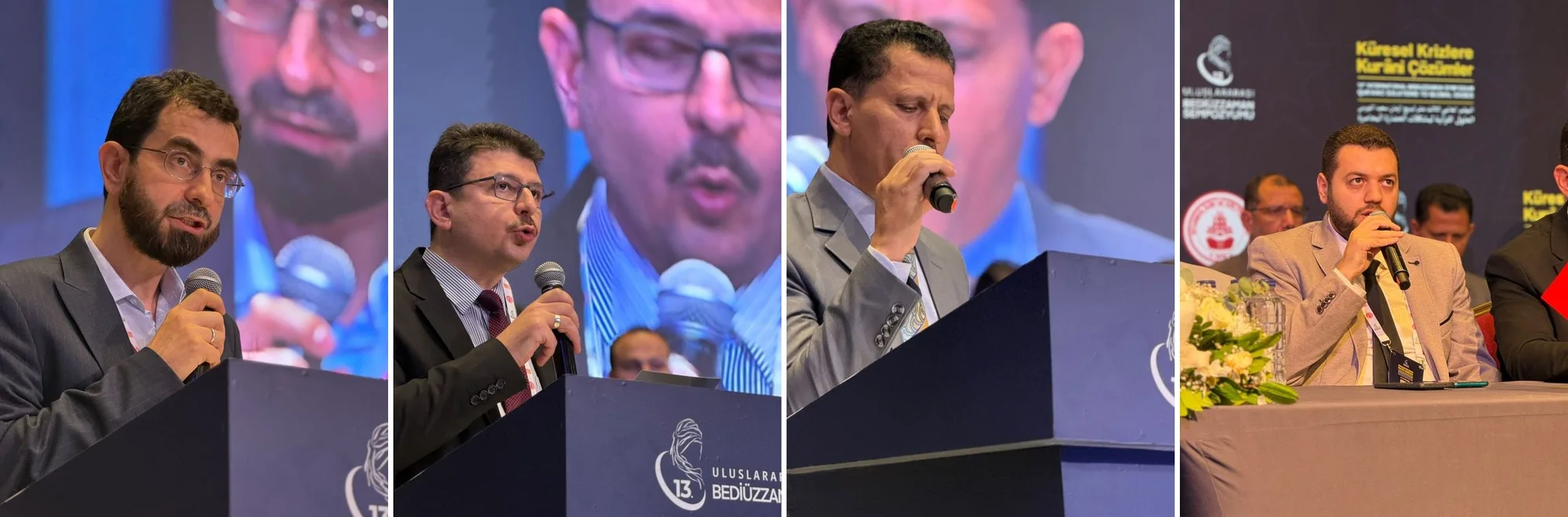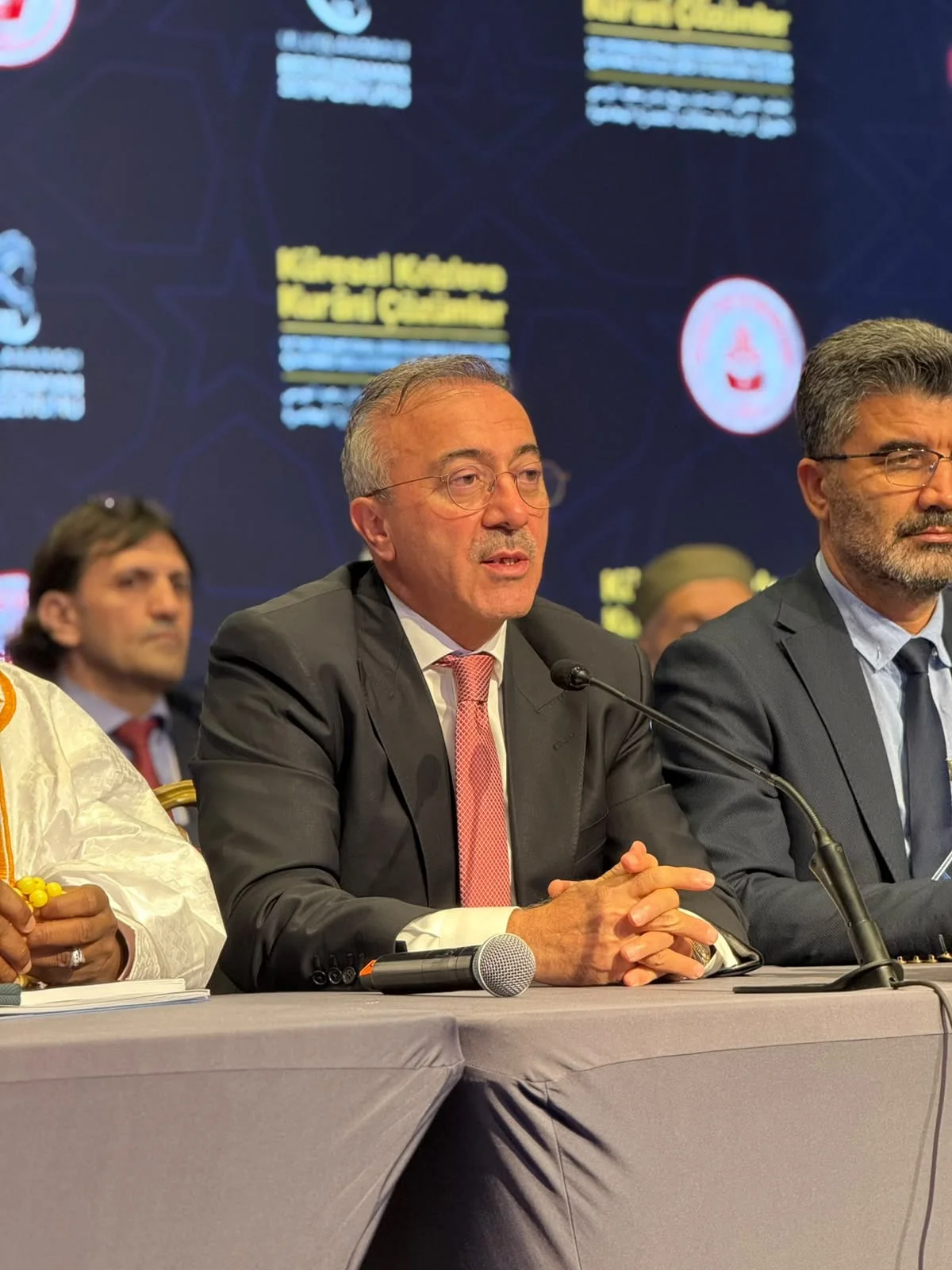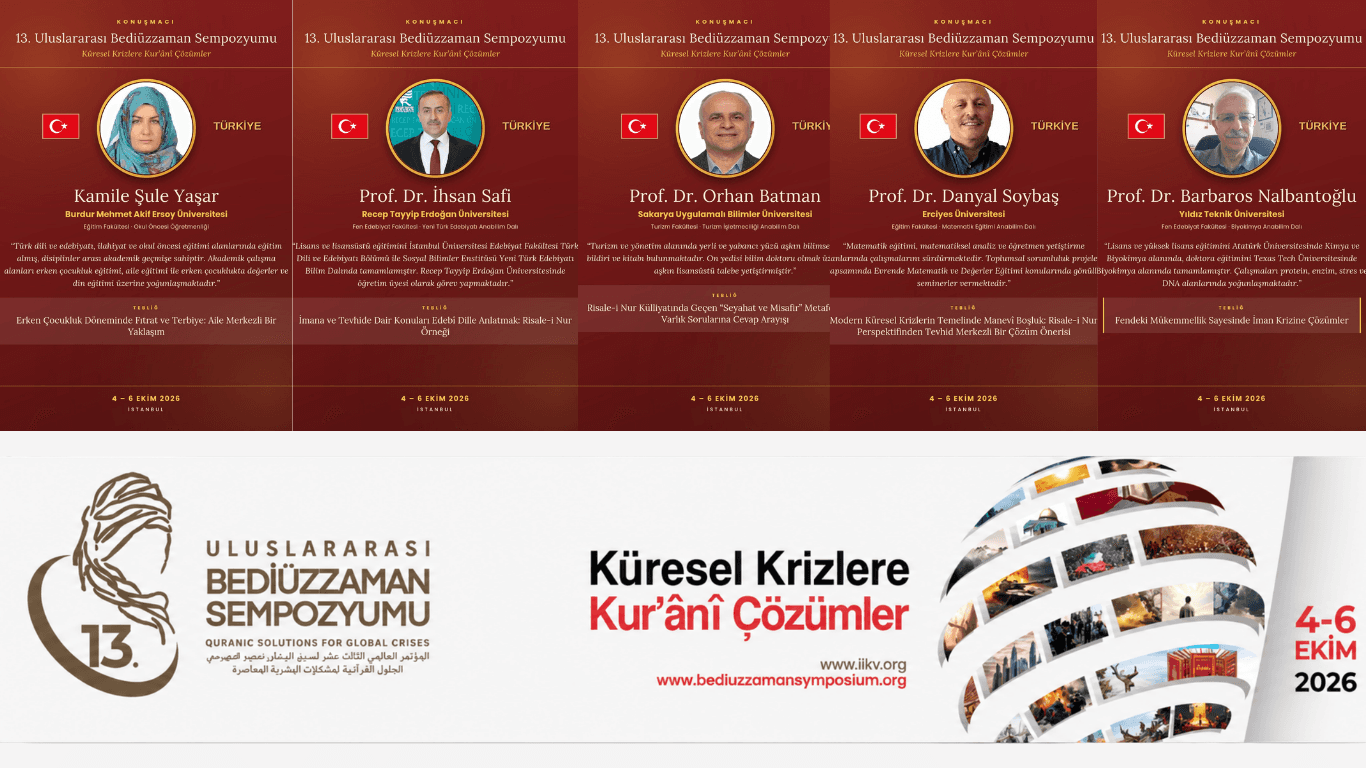
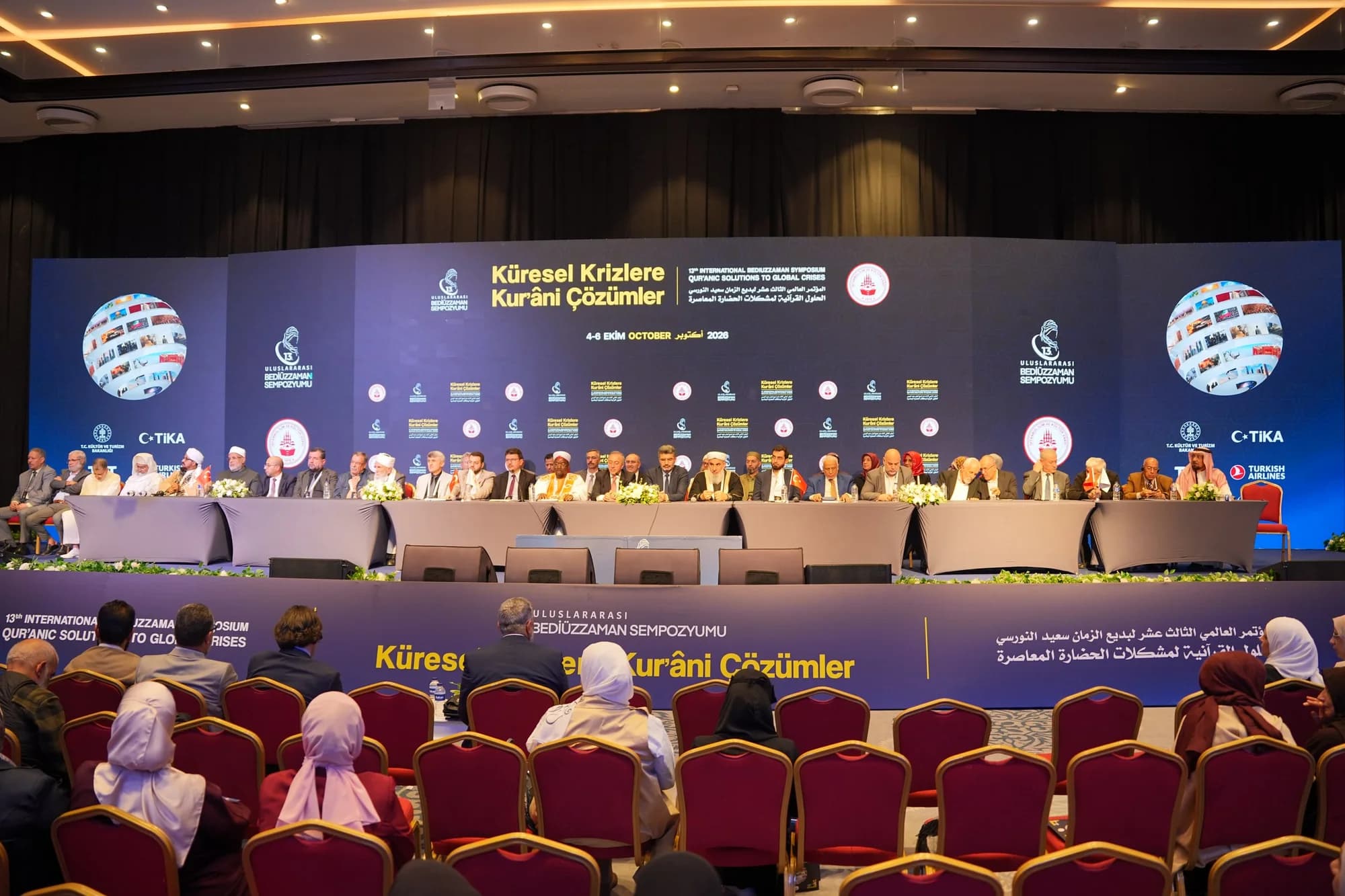
The 13th of the International Bediuzzaman Symposiums, organized by the Istanbul Science and Culture Foundation since 1991, was held in Istanbul on October 4-6, 2026, under the main theme: “Qur’anic Solutions to Global Crises.” The symposium’s opening sessions were held at AKM-Istanbul, while the academic forums and panels took place at the Pullman Istanbul Hotel & Convention Center. Researchers worldwide also participated online.
“Qur’anic Solutions to Global Crises”
October 4-6, 2026, Istanbul
The 13th of the International Bediuzzaman Symposiums, organized by the Istanbul Science and Culture Foundation since 1991, was held in Istanbul on October 4-6, 2026, under the main theme: “Qur’anic Solutions to Global Crises.” The symposium’s opening sessions were held at AKM-Istanbul, while the academic forums and panels took place at the Pullman Istanbul Hotel & Convention Center. Researchers worldwide also participated online.
Continuing a historic tradition, the 13th International Bediuzzaman Symposium became an important platform for generating solutions to humanity's problems by bringing together national and international scholars with a global impact. In this context, the scientific committee selected 262 papers from 668 proposals submitted from among 60 countries and 448 institutions across five continents, and the selected papers were presented in sessions conducted in Turkish, Arabic, English, and Russian.
The symposium addressed wars, migration, injustices, ecological destruction, the breakdown of the family institution, the youth’s search for meaning, new problems arising from the digital age and the digital world, and upheavals in the realms of faith and morality through the perspectives of the Qur’an and the Sunnah.
Human-made systems change over time in accordance with the circumstances of the time and current balances of power. But the Qur’an’s fundamental principles, such as justice, compassion, trust, family, brotherhood, and human dignity, continue to guide humanity in different eras. Bediuzzaman Said Nursi points to the Prophet’s (sas) guidance to all times, saying: “The radiance of the praiseworthy Sunnah is an elixir. That Sunnah suffices those who want a light; there is no need to seek light elsewhere.” And in saying: “Human works and laws become old, change, and are replaced, like humanity. The Qur’an’s judgments and laws, on the other hand, are so permanent and rooted that, as the centuries pass, they show their strength even more,” he presents to humanity’s attention the freshness and liveliness of the Qur’an’s realities, which encompass all times.
The conclusions of the papers presented and the discussions held at the symposium are outlined below for the public’s information.
I. Global Crises and the Vision of Civilization in the New World Order
- The root of crises is spiritual. At the core of the political, economic, and ecological crises of our time lies a spiritual void arising from humanity’s disconnection from the purpose of creation and the meaning of existence. When humanity forgets where it came from, why it exists, to whom the power in its possession belongs, and what the purpose of life is, the knowledge, technology, and power in its hands increase its capacity for destruction rather than lead it to a more humane world. Failing to recognize the Owner of the universe is not only the greatest ignorance; it is the greatest crisis and danger that will destroy humanity’s eternal happiness. The “mana-yı harfî” (other-indicative meaning) perspective forms the foundation of a Tawhid-centered vision of civilization that will heal this disconnection.
- A call to humanity: a world based on justice, not power. The current global order, in which might is prioritized over rights, double standards are legitimized, and international law remains ineffective before the powerful, is unsustainable. States and international organizations are obligated to protect the inviolability of every human being’s life, intellect, lineage, property, and faith as a universal value, regardless of race, religion, or language. This can only be achieved through a vision of civilization, as expressed by Bediuzzaman, that prioritizes rights over might, virtue over self-interest, mutual assistance over conflict, brotherhood over claims of racial or ethnic superiority, and guidance, moderation, and chastity over vain desires.
- The oppression and genocide in Gaza are wounding humanity’s conscience. Israel’s attacks on civilians, hospitals, schools, and places of worship in Gaza, as well as its obstruction of humanitarian aid, constitute outright genocide. We must not remain silent in the face of this oppression. Muslims must raise a stronger and more resolute voice on this matter. The attacks must be stopped immediately, a permanent ceasefire must be established, unimpeded access to humanitarian aid must be ensured, those responsible must be held accountable under international law, and the Palestinian people’s right to live freely and independently on their own land must be guaranteed.
- Justice and shura are the foundations of civilization. The concepts of truth, justice, and balance in the Qur’an, and the notion of “adalet-i mahza” (absolute justice) that Bediuzzaman derives from the Qur’an, offer a powerful alternative to a global order that prioritizes might over rights. All forms of tyranny obstruct social peace. Consultation, freedom, the rule of law, and equality before the law are the indispensable principles of sound governance.
- The path to peace is positive action. Bediuzzaman’s principle of “positive action,” which prioritizes cooperation over conflict and persuasion and service over violence, is a viable model for peace and reconciliation in resolving crises, conflicts, and wars both among Muslims and on a global scale.
- Islamic unity and the ethics of disagreement. In the face of divisions deepened by negative nationalism, sectarian divisions, and differences in character, the concept of Unity among Muslims rooted in the brotherhood of faith; and the ethics of disagreement, which do not turn differences into enmity, must be revived to foster unity and solidarity in the world of Islam. In this context, collaborating against unbelief with the People of the Book and the adherents of other faiths around shared human values is also of great importance.
- The ecological crisis is a moral crisis. The cosmos, as elaborated in the Risale-i Nur, is a “book” to be read. Viewing nature as an object of unlimited consumption is the root cause of ecological destruction. Society must be instilled with the Qur’anic responsibilities of abandoning wastefulness, consuming only what is necessary, achieving zero waste, and preventing food waste.
- Frugality, contentment, and halal earning. Greed and the obsession with hoarding are major causes of global economic instability. The principles of frugality, contentment, and gratitude in the Risale-i Nur offer a guiding compass in the fight against poverty, hoarding, and corruption, as well as in developing halal finance and sustainable consumption models.
II. Building a Revelation-Centered Society and Family
- The family is the sanctuary of society. The institution of the family, which has been weakened on a global scale, must be strengthened again in accordance with the principles of the “fitrah” (innate constitution). Legal regulations, educational programs, and counseling services designed to protect the family are not a matter of choice but a necessity for society’s future. Educational initiatives that support the moral and spiritual development of the family, along with respect and care for the elderly, are also integral parts of this approach.
- Unity of the intellect and the heart in education. An educational approach based solely on transmitting information leads to a loss of meaning and values. An educational vision, which integrates the intellect and the heart, and the natural and religious sciences, as symbolized in Bediuzzaman’s “Madrasa al-Zahra” project, can provide a new direction for today’s educational systems through values-based education and applied educational models spanning from preschool to higher education.
- Youth and nurturing the next generation. Instilling in future generations the principles of faith, chastity, and integrity as outlined by Bediuzzaman in his work A Guide for Youth, which he wrote as counsel for young people grappling with numerous problems of the age related to identity, finding meaning, and belonging, is essential for building a healthy society.
- Migration and human responsibility. The plight of millions of people displaced from their homelands due to wars and crises must be resolved in accordance with the Qur’anic principle that saving a single life is like saving all humanity and the timeless prophetic (peace be upon him) model of brotherhood between the Ansar and the Muhajirun, the host and immigrant communities.
III. Spiritual and Social Issues of the Modern Age
- Artificial intelligence and the digital age. Technology must be used in a way that prioritizes the human being and is guided by moral values. In the face of digital addiction, the attention economy, and the negative effects of social media on moral values and human psychology, the principles of “tafakkur” (reflection) and moderation in the Risale-i Nur offer protective guidance for young people and families.
- Mental health and spiritual resilience. Amid rising global issues such as anxiety, depression, and trauma, the contribution of concepts such as faith, patience, “tawakkul” (putting trust in God), and gratitude to psychological resilience must be considered. Holistic models that integrate modern psychotherapy with Qur’anic and spiritual values should be developed.
- Harmony between science and faith. A materialist understanding of science that attributes the universe solely to causes narrows both the scope of science and the realm of meaning. When findings in the natural sciences are interpreted as evidence revealing the divine order and artistry in the universe, it is understood that there is not conflict but deep harmony between science and faith.
- Truth, language, and aesthetics. In our age, in which the perception of truth has been lost, the Risale-i Nur’s epistemological approach, based on verified faith and proof, offers the possibility of re-establishing truth. The literary language and monotheistic understanding of art in the Risale-i Nur provide an effective path for conveying the truths of faith to the people of our time.
We extend our gratitude to our President, Mr. Recep Tayyip Erdoğan, for his support in making this symposium possible, the Ministry of Culture and Tourism, the Ministry of Foreign Affairs, the Ministry of Transportation and Infrastructure, TIKA (Turkish Cooperation and Coordination Agency), the Presidency for Turks Abroad and Related Communities (YTB), our transportation sponsor Turkish Airlines, our communication sponsors TRT and Anadolu Agency, other relevant institutions, organizations, and bureaucrats of the government of the Republic of Türkiye, all universities that partnered in the symposium’s organization, the organizing and scientific committees whose efforts made this event possible, all scholars who presented papers and participated in the sessions, sister foundations, volunteers, and all guests who have graced us with their presence from various parts of the world.
The list of the above universities, institutions, and foundations is read in the Turkish Concluding Statement.
We hope the 13th International Bediuzzaman Symposium will promote peace and well-being for humanity, foster the scientific and intellectual revival of the Islamic world, and ensure that the universal message of the Risale-i Nur reaches future generations.
Respectfully announced to the public.
Organizing Committee of the 13th International Bediuzzaman Symposium
6 October 2026, Istanbul