
An international seminar recently took place at the Jakarta Syerif Hidayatullah State Islam University, with the title of "The Perception of Personal, Social and Global Security from Faith Perspectives". The seminar (which took place on the 16th of July) was co-organised by both the university and our foundation. Speakers at the conference discussed the various problems in our contemporary world from the perspective of Bediuzzaman Said Nursi's thought.
Dr. Jajang Jahroni said that this seminar was particularly important for the young generation of Indonesians to both understand and disseminate Nursi's ideas, stating that "I remember a conference that I attended twenty years ago. At that time very few people were aware of Said Nursi and his thought and works. Yet today, there are many young academicians writing their masters theses' on the Risale-i Nur. I am very grateful for this development".
Dr. Edi Amin, a faculty member of Syerif Hidayatullah talked about the fact that Nursi's life was separated into the periods of "Old Said" and "New Said" - with the former period being one of more activism in the area of social life and the latter period concentrated more on the Qur'an and preservation of Iman (belief). With regard to this, he stated:
"In the period of the New Said, he went from "I" to the state of "We". He brought the idea of collective spiritual personality, to the forefront. He emphasised the idea of "annihilation in the brothers" as a manifestation of a true collective spiritual personality that did not base its faith-service activities on the cult of personality of a leader. Said Nursi saw himself as a fellow student of the Risale-i Nur along with his muslim brothers and sisters. He established and emphasised the importance of an altruistic character amongst students of the Risale. Nursi believed that this is 'the time of the community' and that Nur students should not really concern themselves with politics and its factionalism."
"In order to safeguard public security, we need 'Positive Action'"
In his talk titled "Knowledge Of Positive Action: Said Nursi's First And Last Lesson", Prof Dr. Alparslan Açıkgenç stated that "A detailed analysis of this sentence from Nursi's last letter to his students is required of us more than ever".
Prof. Açıkgenç went onto explain that our current time is one of widespread hostility towards Islam and Muslims, and that in light of this Said Nursi has provided us with a beautifully and succinctly stated definition of our required response: "My brothers, our mission is to act positively, it is not to act negatively". Açıkgenç then asked the rhetorical question of what Nursi actually means by 'positive action' and 'negative' action. "To properly understand this we need to read and analyse the entire Risale-i Nur", he added.
"Firstly, it is established that civil security should be safeguarded as well as order and regulation of the society. This constitutes 'positive action'. But how must this actually be provided? The Risale-i Nur states that the provision of social order and security is only possible as a result of knowledge. However, such knowledge should be acquired according to what the Islamic-science tradition terms as 'the order of knowing'. In other words, each aspect of knowledge has a certain rank and level and it gains prominence according to its respective level. For example, the highest level of knowledge is that of the Qur'an and this is the first type of knowledge that should be acquired and internalised. This is followed then by firstly the belief in Allah's Names (Iman-i Billah) and this develops with "marifetullah" (Internal knowledge of Allah's Names) followed by the highest state of "Muhabbetullah" (Love of Allah). Such knowledge results in the cultivation of the highest character and the roots of security both internally and publically. In the dream and vision that he describes in his 23rd Word, Nursi warns about the wastefulness and decadence of modern lives and draws us away from its attractions. Through such guidances and admonitions, a person who has obtained the spiritual life achieves a level of self-transformation and opens up the way towards the preservation of social life and order. In such conditions of our times, no believer can directly engage with a provocation - having known and been aware of the truth and thus does not resort to negative actions or reactions. Instead, he works to make his life easier through his learning to cope with and confront all worldly hardships and difficulties".
"If we want a society free of violence and crime, we should place in our hearts the principle of 'belief through investigation'"
IFSC Executive President Said Yüce stressed that for a more safe and peaceful world there needs to be the wide adoption of education systems that center all subjects through the prism of Iman (Belief). In order to achieve this, the concept of Belief to be propagated must be that of "Tahkik-i Iman" (Belief Through Investigation). He went onto state that:
"If we stop to give a correct diagnosis of our current global problems we will find that a remedy for them is readily available. The provision of public order, protection from terror, injustice, conflict and criminal action can potentially be derived from an adequate and effective form of spiritually-oriented moral values education."
"The fruits and consequences of a materialistic education system bereft of all Belief are now clear for all eyes of the world to see. The laws, police precautions, cameras, courts and prisons have not acted as sufficient solutions or deterrents. If the politicians, teachers and educators, security guards and parents/guardians all want crime to decrease then the most effective remedy is 'the placement in the heart of a spiritual watchman/security guard'. Those people who truly internalise and are conscious of their belief in Allah and the Last Day are such people who stay away from all types of crime and violent acts. They are those who are afraid of having to answer to God on the Day Of Judgement rather than merely answering to police and courts."
"The Risale-i Nur is an exegesis of the Qur'an that does not impact or gratify the heart and spirit through mere methods and formulas of materialism. It is a highly beneficial treatise for the modern person, and which encourages examination of the Qur'an through the inculcation of Iman-derived contemplation and critical reflection on the Names of God in the universe."
Mr Yüce went onto state that unfortunately in our current times the understanding of 'civilization' still constitutes that of power and strength instead of justice, 'national interests' instead of virtue and goodness, conflict instead of assistance, racial nationalism instead of true patriotism, hedonism instead of lofty and refined sentiments and feelings. "According to Bediuzzaman, the way to achieve peace for mankind is to go against the ideology of 'might is right'. Rather, those who are righteous should be above the strong and strong only for their righteousness. Instead of self-interest and benefit, virtue and assistance should predominate. Instead of racism, religious brotherhood and genuine patriotism. In place of hedonism, the cultivation and development of legitimate and elevated sentiments and sensibilities that are suitable for God's creation. These are that which a virtuous civilization should pursue."
"The Risale-i Nur has made a serious contribution towards the positive transformation of Turkish youth and their religious life"
Dr. Osman Yapar, in a talk titled "The Importance Of Islamic Education In The Light Of Modern Problems and Opportunities" said that millions of Risale students are witnesses to the truth of how positively the Risale has impacted the lives of youth. He also mentioned that Muslim communities in Europe have gained growing interest in the impact of the Risale and have now frequently paid visits to Turkey in order to investigate further. Contrary to the assumptions of many people, such a change and transformation does not derive from an ascending political force. Rather, it gained an edge over political issues and its development was sudden and unexpected, contributing a strong bottom-up transformation of peoples' educational and material life.
"The reason for the creation of different nations and societies is not emnity or racism, but for mutual assistance and knowing each other"
The final speaker, Prof Dr. Ahmet Kayacık, gave a talk titled "Two Factors That Threaten Social Harmony According to Said Nursi: Ethno-nationalism and Partisanship". When starting his talk, Prof. Kayacık mentioned that Nursi had discussed the issue of racism and ethno-nationalism under five subheadings. He also explained how Nursi discussed the Qur'anic verse about nations knowing each other, with the aims of different nations designed to produce relationships in social life and promote mutual assistance. The cause for difference between nations is not for the production of emnity and estrangement.
He mentioned that in the Treatise On Brotherhood, Nursi emphasises that stoking emnity between believers is considered a sin. To create emnity based on one bad character attribute was likened by Nursi to the sinking of a boat because of the presence of one bad person among ten innocents. Both emnity and love cannot retain positions in the heart for the same person, and Nursi likened the quality of overlooking one bad attribute in a brother in order to recognise ten good attributes to being similar in weightiness to Mount Uhud.
PROTOCOL OF COLLABORATION SIGNED BETWEEN OUR FOUNDATION AND SYERIF HIDAYATULLAH STATE ISLAM UNIVERSITY
Following the international seminar, our respective institutions attended a meeting to discuss future programmes and events to possibly be co-organised. Rector of the university, Prof. Dr. Amany Lubis and IFSC Executive President Said Yüce signed together a protocol of collaboration for future education-based programmes.


Related content
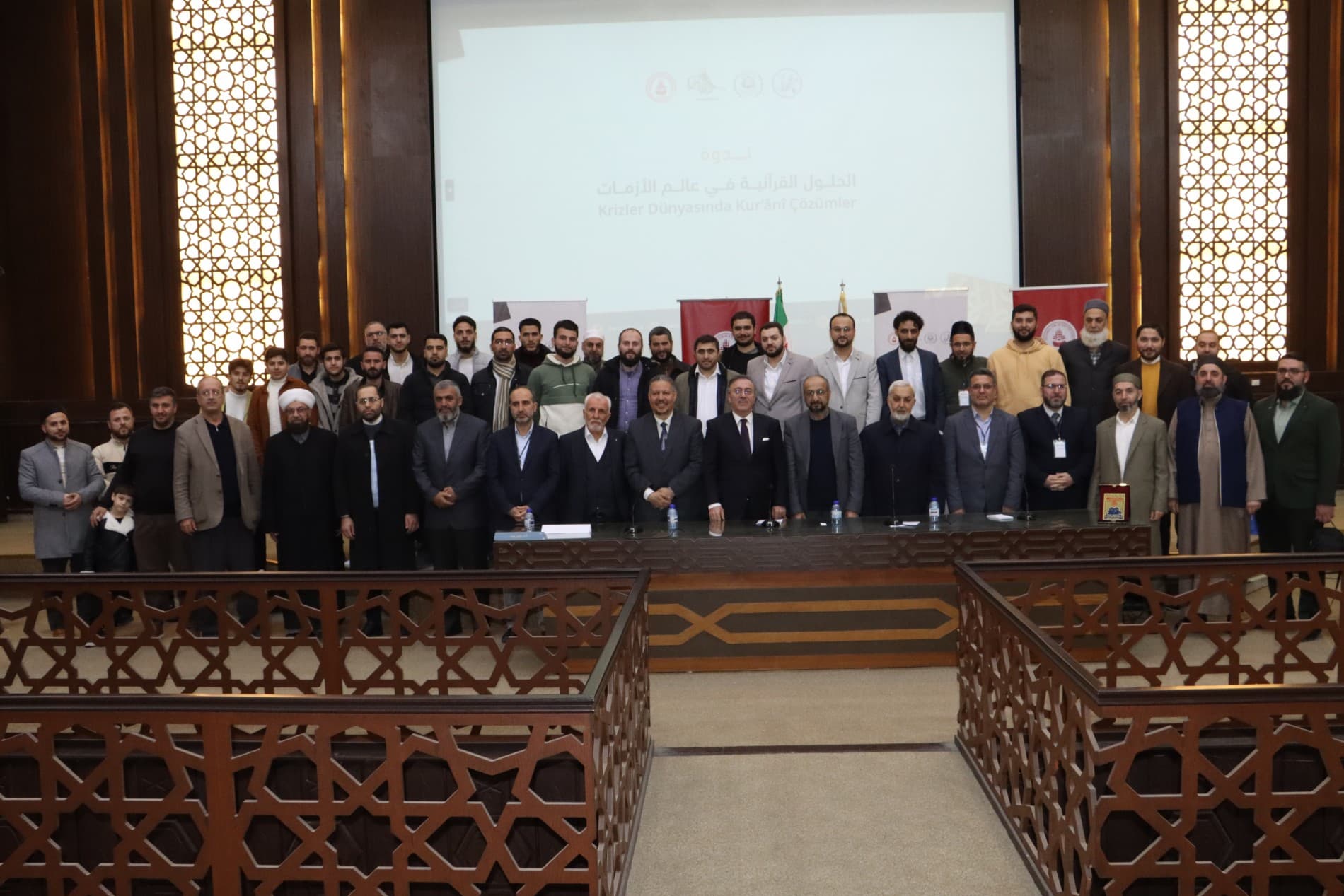
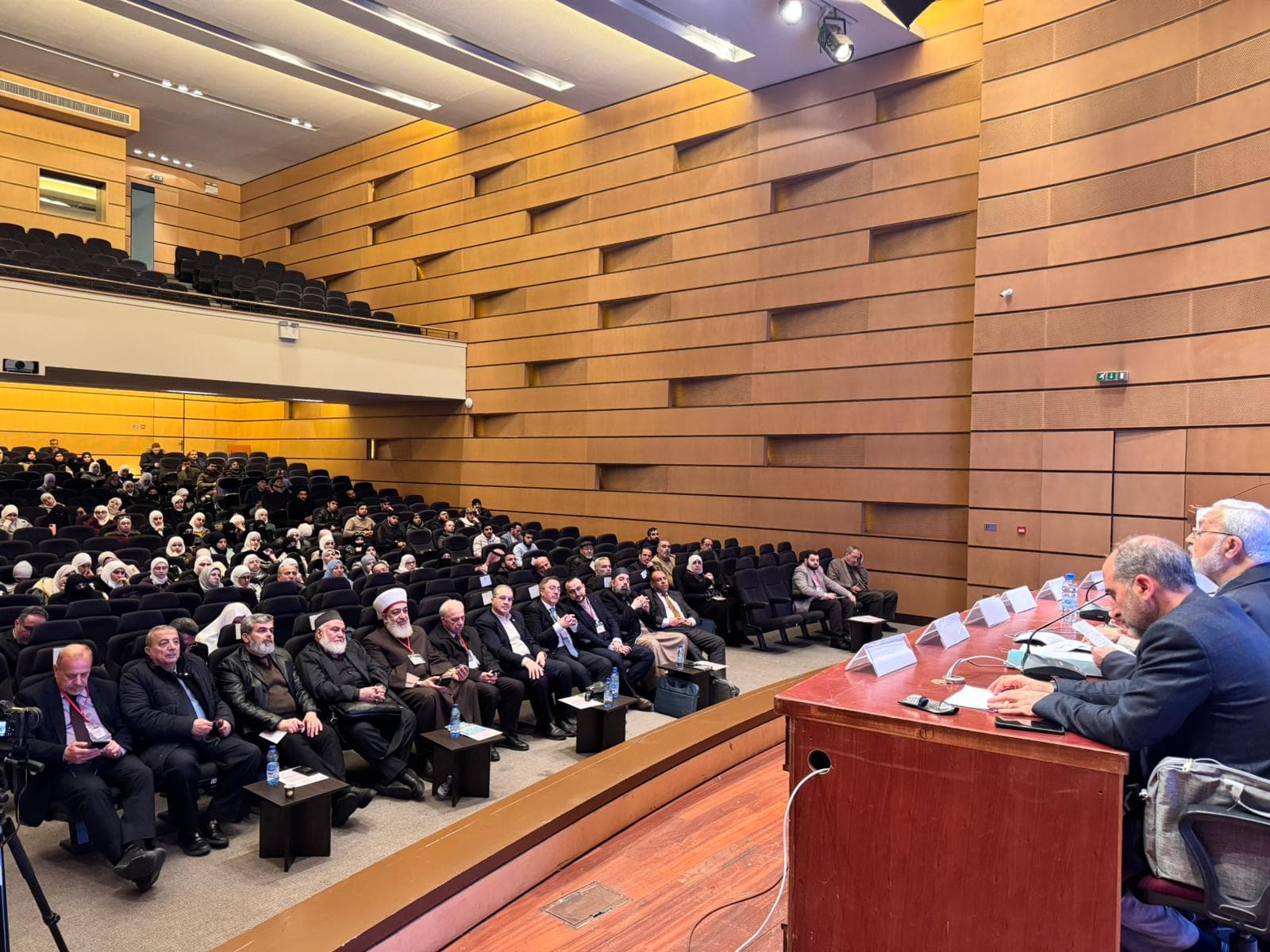
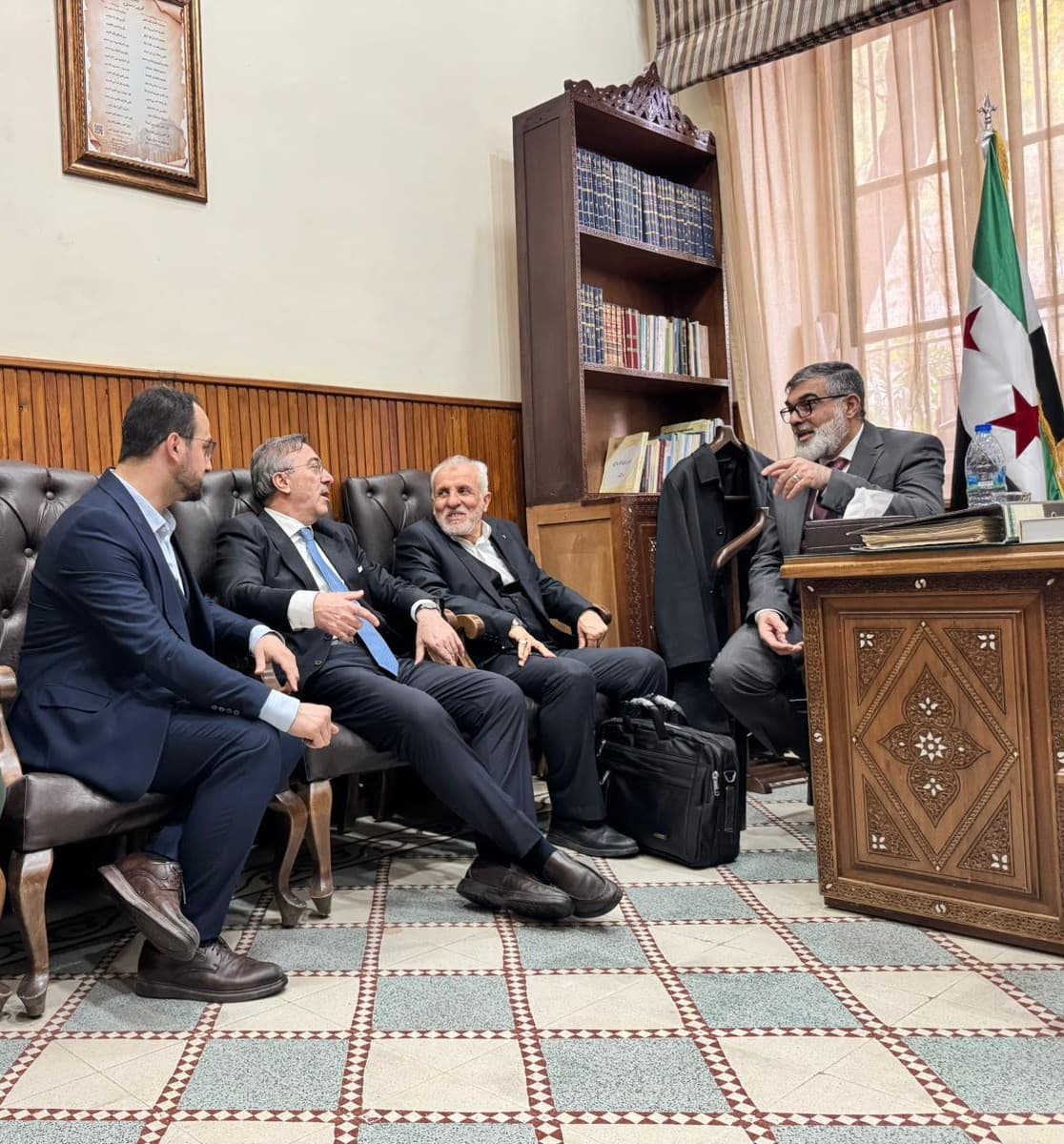
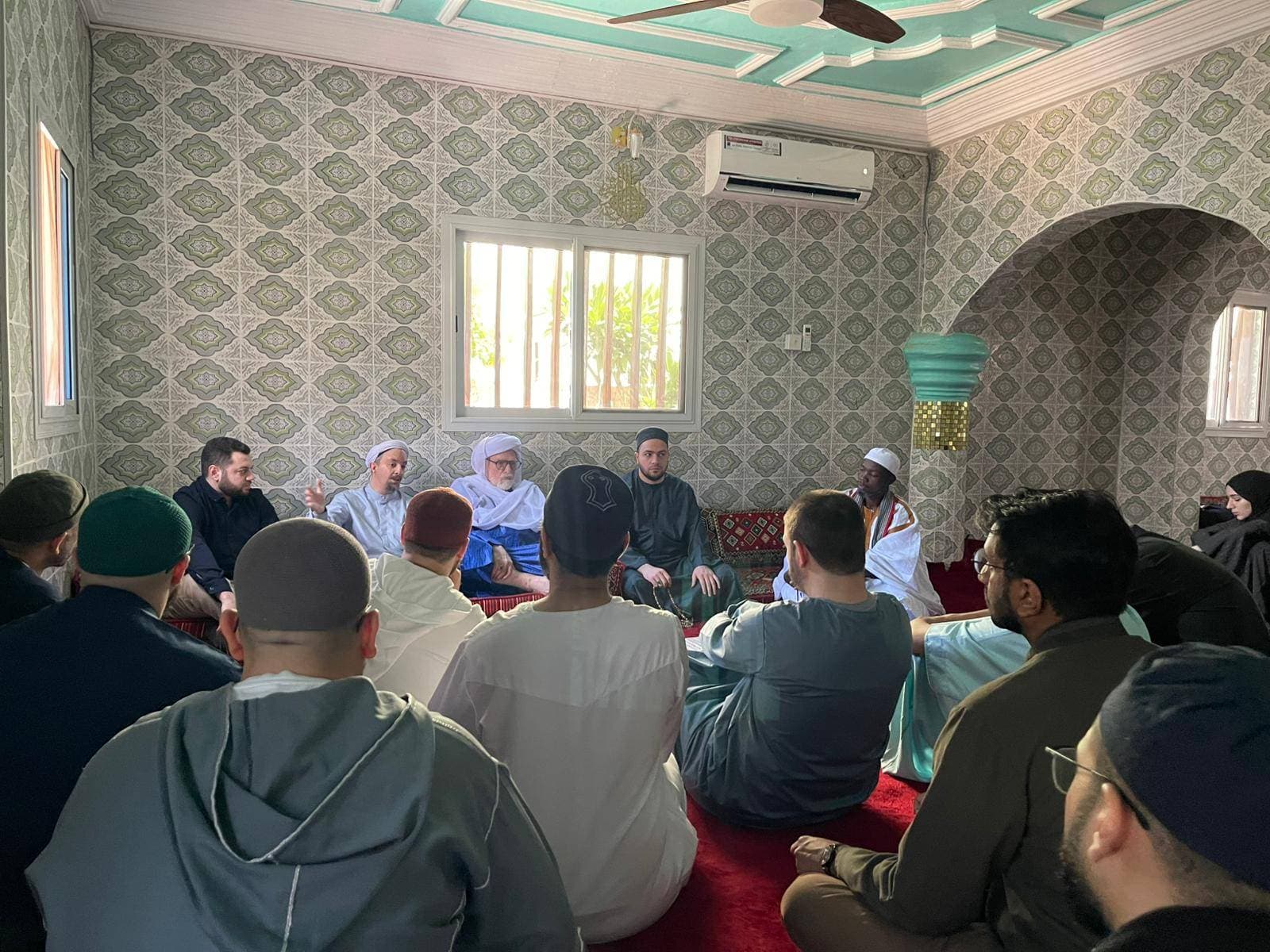
The International Unit of İİKV Explained Risale-i Nur at the Qadiri Gathering in Gambia
Representatives of the International Unit of the Istanbul Foundation for Knowledge and Culture (İİKV) attended the traditional annual gathering of the Qadiri community held in the African country of Gambia. As part of the program, the İİKV delegation came together with Sheikh Muhammad Gilani, one of the descendants of His Holiness Abdul Qadir Gilani and one of the most important spiritual leaders of the Qadiri path today. In the gathering, which took place in a spiritual atmosphere, various lessons and dhikr circles were conducted.