Istanbul Foundation for Science and Culture

News

News

Visit to Prof. Dr. Mehmet Görmez and Invitation to the 13th International Bediuzzaman Symposium

Former President of Religious Affairs Prof. Dr. Mehmet Görmez, who was appointed as the Rector of the International Islamic Science and Technology University, was visited and invited to the 13th International Bediuzzaman Symposium, which will be held on October 4–6, 2026. In addition to the Chairman of our Board of Trustees, Said Yüce, Ünal Akyüz, Bayram Özer, and Mehmet Ali Gündoğdu attended the visit.


News

Qur`an and Science

In fact all the knowledge needed by humans is available in the Al Quran as Hudallinnas, although in broad outline the details can be found in the sunnah of Rasulallah

News

Guidelines for Contemporary Qur’an Education

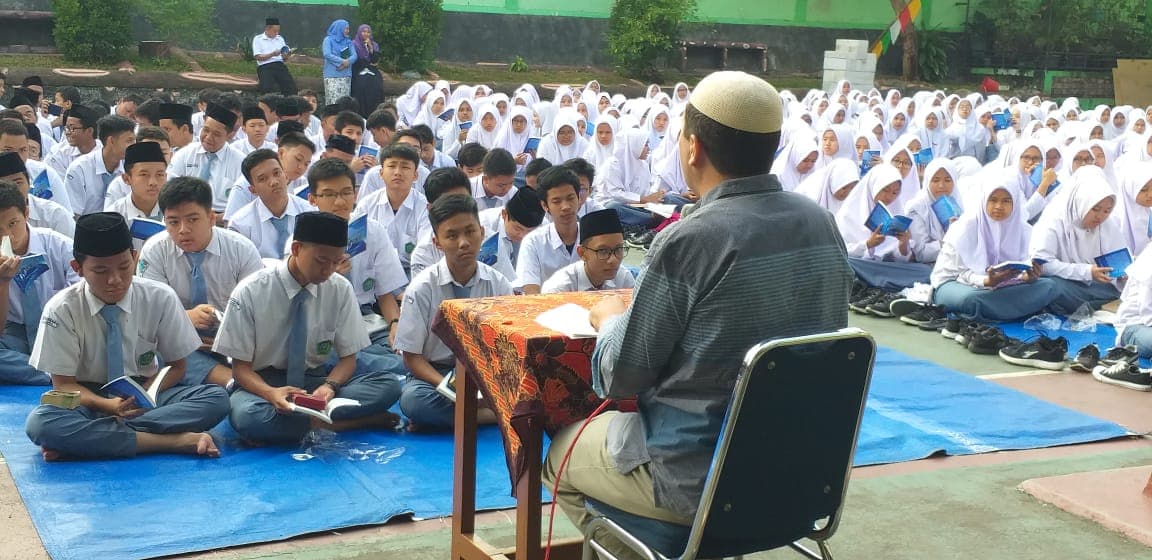
The aim of this paper is to increase awareness of the 'contemporary' circumstances in Qur'an and Islamic education. There will be references to a prominent scholar from Turkey, Bediuzzaman Said Nursi, and to his works called Risale-i Nur to expand on these circumstances. His devotion to education on the meaning of the Qur'an in the modern times has led to saving many souls from the misguidance and heedlessness. Our prayers is to benefit from these works in the path of providing effective Qur'an education for the future generations of Muslims.

News

Man and Universes in the Qur’an

The ontology reflected in the Qur’an reveals multi universes as this is observed in many verses that uses the phrase “Rabbu’l-’Âlamîn” (Lord of the universes). This reminds us our relationship to those universes because the word “universe” (‘âlam) is used in plural. It is the purpose of this study to examine such verses in order to understand three issues in the Qur’an: The first is the Qur’an’s ontology as reflected in the phrase “Lord of the universes” and other relevant phrases referring to a certain ontological reality. The second is the cosmology represented by these phrases and similar statements in the Qur’an. The third is the understanding of human beings and their cosmological reality that makes them intimately related to these universes. Besides I would like to examine the same issue as understood by Bediuzzaman Said Nursi, and then try to see how this ontology and anthropological cosmology was analyzed in his works called the Risale-i Nur Collection (Risale-i Nur ).

News

Bediuzzaman Said Nursi’s Tafseer of the Qur’an

The main goal of the works of Bediüzzaman Said Nursi, who is one of the important thinkers of the 20th century is to enable the people of his age to understand and practice the verses of Quran. In his books, he directly explained six hundred and twenty verses of the Quran and referred to thousands of verses. He examined the verses in the axis of general themes of the Quran, which are resurrection, tawheed (unity of Allah), prophethood and justice. In his books, Nursi focused on “to offer and express the realities of belief in the Quran with strong proofs” Bediüzzaman based his tafseer method on the combination of revelation and universe. The reality of the universe is understood with mana-yı harfi not with mana-yı ismi. Bediuzzaman used all the methods used by his contemporary mufaseers idiosyncratically and in a coherent way so as to serve the understanding and practice of the Qur’an in life. However while he was meeting the expectations of the society and the requirements of the age

News

Knowledge towards Constructive Action Nursi’s First and Last Moral

In his last letter to his students Nursi starts with an exemplary sentence: “Our duty is to act positively, and it is not to act negatively”. The first duty assigns his disciples to act constructively which is expressed as “positive action”; whereas the second one recommends avoiding violence which expresses as “negative action”. We need to spend time to reflect on these statement as to what they mean and how to realize positive action and avoid negative action. We shall also focus on the letter in order to see how he explains his idea of positive action. In this paper I would like to discuss the principles analyzed in the major works of Nursi called the Risale-i Nur Collection.

News

The Perception of Personal, Social and Global Security from a Faith Perspective

While discussing security problem and the education of moral values as a solution; we can say that the security problem is the number one problem in the world. The source of the behaviours of violence and terror is the destroyed worlds of minds and spirits. Nowadays we observe a wear and deterioration in the human values based on faith. The education of these values are crucially needed to stop the present pace which threatens the future of humanity and to restore peace again in the society. A faith based education will contribute to and have a positive influence over public security.

News

Faith and Human Perfection in the Modern Age: Nursi’s Aspects

Human perfection has been an important problem for centuries. People tried to get a perfectness, but sometimes they could not be successful in getting it. In this age Said Nursi, as an important religious figure, attempted to solve this problem or issue. For his aim is to solve and help the problems about unbelief. He explained his ideas about this subject matter in his book The Words at the Twenty-third Word. Just he did in all subjects he used a Quranic verses to explain in this issue. He examines in this chapter the relationship between human kind and his perfection in the context of belief and expresses his ideas in five points. As he exposes ideas about the issue he uses metaphors and then goes to the realities of these metaphors and we find some comparisons between the believer and unbeliever’s circumstances.

News

Spiritual Dimensions of Human Beings as the Model of Social Life in Nursi's Thought

Social harmony endows the society with peace and tolerance. For this reason, it is very important especially in our world today with global influences and speedy movement of people with different cultures. This paper is an attempt first to elucidate the concept of “spirituality” as understood by Bediuzzaman Sad Nursi, and then try to see how this was achieved in his works called the Risale-i Nur Collection (Risale-i Nur Külliyatı, I shall abbreviate this as Rasâil). My topic requires a number of subjects to be analyzed, such as human nature, and the modes of thought which result from that nature and also how this is reflected on the individual’s life and society. I hope that I can bring many relevant passages from the Rasâil in order to understand how all these concepts are interwoven in these contemporary works.

4–6 October 2026 · Istanbul

13th International Bediuzzaman Symposium

Visit the symposium website for the programme, papers and registration.