
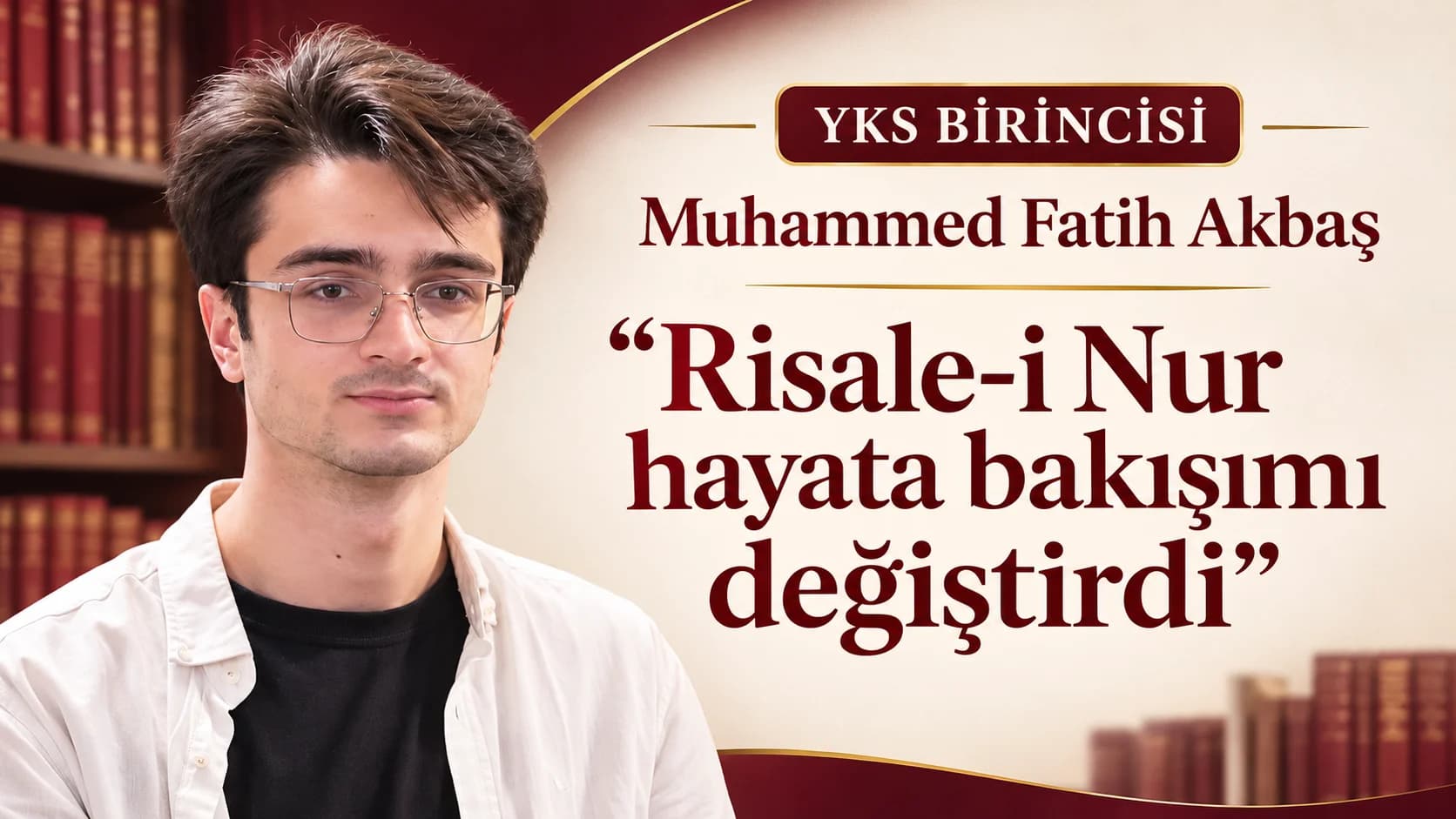
Muhammed Fatih Akbaş, one of the top scorers in the 2026 YKS, explains how he has benefited from the Risale-i Nur in an interview with Genç Yorum Dergisi. He offers particularly thought-provoking advice for young people on sleep routines and study discipline. Here is the interview:
Welcome, brother. First of all, could you introduce yourself?
Peace be upon you. I am Muhammed Fatih Akbaş. I am from Şanlıurfa. I took the YKS this year. With my additional TÜBİTAK points, I came first in Türkiye. I am currently studying medicine at the International School of Medicine at Medipol Üniversitesi in İstanbul. I am also pursuing a double major in artificial intelligence engineering.
Achievement is not our own accomplishment; it is Allah’s employing us.
You know Zübeyir Gündüzalp, a student of Master Bediuzzaman, said, “A student of the Risale-i Nur should be top of the class.” You went beyond that and came first in the country. Did the thought, “I am a student of the Risale-i Nur; I should do my very best,” also motivate you in your studies?
Of course. Every person who reads the Risale-i Nur is entrusted with a duty. Because when you read it, the duty of spreading that truth is entrusted to you. Knowing requires you to convey it. At present, science is the greatest weapon in the hands of atheism and deism. They use Muslims’ failure to make sufficient progress in science as a weapon. Yet science is entirely a reflection of Allah’s Names. It is very important for people who adopt the perspective of the Risale-i Nur to make progress in science. This is because the Risale-i Nur opens a different window onto existence.
The reason the Master’s works differ from other books of kalam is that they are addressed to the understanding of this age. This age’s understanding is founded on science and technology. We cannot serve while disregarding this. While preparing for the Olympiads, I realized that the phenomena taught to us are explained in a very superficial and materialistic way. We know what we need to explain, but not how to explain it. For example, a type of cell death called apoptosis occurs during birth. The fact that we are born in the midst of death carries many meanings. The world of science misses this meaning because it views things through the lens of atheism and materialism. We need to take up this task and explain science to people in this way.
Everyone has an aptitude bestowed by the Almighty. What matters is using that aptitude in the best possible way in service. I, too, thought that I should serve by using the aptitude given to me in science and academia. This is not a superiority we have earned; it is Allah employing us to reflect His Names. This awareness is enough to motivate us.
Connection with Allah reduces stress
One of the greatest problems candidates generally face while preparing for exams is not having enough time and being unable to cover the material. You made time both for reading the Risale-i Nur and for preparing for the exam. What were your daily routine and time-management habits like?
Because of school, we got up early in the morning. What needs to be done should always be determined in advance. If you act as you please, the day is wasted. First, you should make an annual plan: What do I need to complete this year? Then break it down into months, weeks, and days. At the end of the day, you should also take stock of yourself: Did I do what I needed to do today? This self-assessment automatically instils discipline.
In the mornings, I would do reading-comprehension and Turkish questions. I never missed my daily practice tests. I also never stopped reading books. I tried to read at least a little every day, because reading books is what really improves your performance in reading-comprehension and philosophy questions. I read both the Risale and books on philosophy. I also read pessimistic philosophical works; it is important to become familiar with those ideas so that you can learn to think critically about them. These readings open up perceptions that have been closed off in your mind and change your approach to questions.
Prayer is also very important. Being constantly immersed in worldly affairs is contrary to human nature and creates a feeling of distress. Prayer brings a person relief. There is a great difference between starting to study after prayer and how you felt before; you begin feeling refreshed. They should also remember to pray after performing the ritual prayer. Before every exam, whether important or not, I would constantly ask for help. Being connected with Allah relieves stress and brings comfort. When you ask Him once, you feel at ease; He has heard you, and nothing else is needed.
They should not become too engrossed in things that will distract them from this purpose. When you stray from your purpose, you fall into heedlessness. This applies to both worldly and spiritual life. They must be sure to keep their study breaks balanced. If they have set aside fifteen minutes, they should not exceed that. Once they do, it becomes difficult to return to studying. They should give up social media and the news as much as possible. These draw a person from the narrowest circle to the widest, and one cannot keep up. Their focus should be on their goals in the narrowest circle—that is, themselves.
What was your sleep routine like?
As for sleep, I tried not to leave my studies until late at night whenever possible. Mornings were more productive for me. Going to bed late increases problems with concentration, especially in TYT mathematics. The most important reason for this is insufficient or poor-quality sleep. If possible, bedtime should not be later than midnight. I usually went to bed between half past eleven and midnight. Sometimes I would disrupt this routine when I had a lot to study, but generally I went to bed at that time. Not everyone may be able to study after the morning prayer; each person should adjust their routine according to their own nature. For those who can manage it, those hours are very productive, especially for memorization.
What considerations influenced your choice of medical school?
I want to make progress primarily in the field of science. I chose medicine not to become a doctor, but to explore human anatomy and conduct research in this field. My current goal is to work on technologies that use artificial intelligence in medicine. I chose medicine out of a desire to learn about human anatomy, because the human being is a creature at the centre of the universe and one dimension of inner contemplation. Inner contemplation means considering the human being together with their spirit and anatomy. Medicine makes this possible. That is why I was drawn to medicine and enjoyed the subjects. In the future, I would like to conduct scientific research on diseases and advance academically.
Ayetü’l Kübra changed my perspective
The lessons taught to us are generally far removed from contemplation and are presented more from a worldly perspective. In the Fruit Epistle, the Master says, “Listen not to your teachers, but to those sciences.” Were you able to make those sciences a means of contemplation as you studied them?
I would not have been able to contemplate in this way if I had not read the Risale. We are taught the outer shell of things, without delving into their essence. If you do not read the Risale-i Nur for a long time, your lessons do not mean much to you; you see them only in terms of exam questions. But when you begin reading the Risale, especially Ayetü’l-Kübra, that knowledge comes to mind and your perspective changes completely. When I read the Risale during breaks, my perspective would change when I returned to studying. Especially in Year 11, while studying the plant kingdom, I would feel like putting my book down and contemplating.
The Risale-i Nur is what makes this possible. At times, even other books on kalam and Islamic philosophy can give rise to a materialistic feeling. This is because they offer explanations directed entirely at the intellect; they do not fully satisfy the heart. The purpose of the Risale-i Nur is not to explain very complicated things to you, but to lead you to the truth. Your heart also receives its share, and it speaks to your emotions as well. Our perspective on science and lessons needs to change completely. We should choose a way of learning that addresses not only the intellect, but also the emotions and conscience. What is taught at present is removed from emotion, conscience, and even reason itself. Everything is explained, but when the final step—the point of connecting it all to Allah—is missing, everything remains incomplete.
One of the greatest difficulties young people face in their exam year is psychological pressure, stress, pressure from their families, and being compared with others. What would you like to say to young people about this?
First and foremost, they should never give up hope. When you lose hope, stress increases even more. The first thing to do when setting out is to remain hopeful. No matter how badly an exam goes, as long as you do not lose hope, you will not become excessively stressed. Staying constantly connected with Allah provides great self-confidence and relief. They should not hesitate to speak to Allah, as though speaking to a friend. I do not like reciting memorized prayers. I speak to Allah just as I speak to my friends or family. It feels more sincere. You feel at ease when you tell Him; He hears you and is by your side. After verbal supplication, you also feel moved to make supplication through action. When you do not, you feel ashamed. It is like the difficulty of repenting after committing a sin. That sense of shame gives rise to the feeling, “I should study harder tomorrow.”
Family pressure is also a problem. Comparing a child with others can be very damaging to a student. Every disposition is different. Allah has not created anyone in the same way; He has given each person different aptitudes. Some have the capacity to succeed by working harder, others by working less. We should not compare anyone with anyone else. Everyone has been created with a different disposition. What should a student do in such a situation? In fact, someone who trusts in Allah stops caring, at a certain point, about what people say. They know that they will answer only to Him. They dream and work for His sake. Their aim is not to please anyone. This is the peace that reliance on Allah brings.
Being a person devoted to a cause requires sacrifice
The thing that most troubles the friends preparing for the exam is their circle of friends. What was your circle of friends like, and what advice would you give to those who struggle with this?
My circle of friends was not bad. There were four of us. All four of us had goals related to the exam. Another came first in Turkey, one came 75th, and the other ranked around 300th. In such circumstances, everyone supports and helps one another. But if things are otherwise, a person should distance themselves from those circles. It is important to make sacrifices. Being a person devoted to a cause requires this. One must be prepared to sacrifice friendships that draw one away from one’s cause. One should not say, “They’ll be upset with me; they’ll be hurt.” What about the promise you made to Allah?
There is also the mission that the Islamic world has entrusted to us. Every suffering child, the fact that the Islamic world has fallen so far behind… Someone conscious of these things should not act in ways that take them away from their cause. Because each time they do, they will have to answer for it to them. Each of those children will say in the hereafter, “When you had opportunities that I was denied, why did you do these things? Why did you waste them having fun?” If a person keeps this reckoning in mind, they can maintain their balance. They, too, should take up a cause; they must have a cause of their own. And in line with this, they should sacrifice the things that need to be sacrificed.
Were there times or periods when you struggled while preparing for the exam?
Of course. There were times when we were about to give up; our scores just wouldn’t improve; there were psychological difficulties and exhaustion. Sometimes a person feels alone. People are not always stable beings. Sometimes they can fall. But at such times, they need to get back up. Falling is perfectly normal. One should not be overcome by pessimism. When a person sets out on this path, they should know that they will get tired and suffer. There will sometimes be failures. This is really a test, a process that develops and matures you. This process is temporary, and one must be aware of that.
Sometimes you also encounter surprises. For example, just when I was about to give up, I would suddenly find myself getting a score I never expected. One must be patient. The process of being patient can sometimes be exhausting, but they should not see this difficulty and give up. For, as the Almighty says, “Surely, with hardship comes ease.” We can say that this applies to every aspect of life.
While preparing for an exam, it is also necessary to clear one’s head and take part in permissible pleasures and recreation. During the exam period, how did you stay connected with what is permissible? Did you benefit from it?
Of course, I did not completely give up my social life; that would not be right anyway. If you have the right friends, you can enjoy yourself with them. When you focus too much on something, the feeling that eventually comes is one of being overwhelmed. There is a reason Allah has made what is within the permissible sphere permissible for us. But the important thing here is balance. If the time you spend having fun exceeds its proper limits, it too ceases to be permissible and becomes a waste of time. That is why it is necessary to strike a balance.
Social media harms concentration
Spending a lot of time on social media and in digital spaces is also a major problem when preparing for exams. How did you set limits for yourself in this regard?
Actually, I have to thank my family for this. When I started high school, I immediately asked for a phone. They said, “No.” They said, “We won’t get you one until you start university.” I objected at the time and thought it was unreasonable. But now that I think about it, they did me a great kindness. Because it is hardly possible to maintain balance here. Once you start using social media, you can no longer maintain that balance. I had a social media account during that period, but I didn’t have a phone. I would sometimes say I’d take a look on my mother’s phone. In other words, even when you take a look, you can’t stop.
Once you start using social media, you begin to take an interest in everything. This harms you greatly, both your focus and your attention span… It also makes it harder to study. At this point, you need to move away from the idea, “I can maintain a balance,” and detach yourself from social media. They won’t lose very much. I think they should not use smartphones during this period. They should give their phones to their families. They can use them freely after the exam.
Using social media at high-school age is harmful. You don’t know what you should do. All of a sudden, you find yourself on social media, confronted with many people and many videos. It seriously harms your focus. Afterwards, it becomes difficult to focus on something or listen to something. After using social media for a long time, you will find it difficult to read books. You will even find it difficult to watch a long video, because you have become accustomed to watching short videos. It is wrong to devote time to social media before your willpower has fully strengthened.
Finally, what would you recommend to young people preparing for exams, especially Nur students?
They should have a cause, an aim. They should have a purpose that gives meaning to their youth, their lives, and every breath they take. Aimlessness harms a person. Someone without a purpose cannot do anything sincerely. But if you have an aim, even if you fail, what you do does not become meaningless; you continue working at all times. When a person has a lofty ideal, they do not worry so much about trivial troubles. But when they abandon that lofty aim, trivial troubles overwhelm them.
They should be responsible. They should consider the opportunities given to them but not to other children. They should fulfil the responsibility that comes with those opportunities. And they should reflect on the history of the country in which they live and its present state. They should recognise the duty this situation places upon them.
If you have no purpose, all your time may pass in heedlessness. But if you have a purpose, heedlessness begins to trouble you and make you uncomfortable. They should take up a cause for which they would give everything.
May Allah be pleased with you, brother. Thank you.
Photo: Muayyed Kasım
Mustafa Gönüllü/ Genç Yorum Dergisi
Source: This interview was first published in Genç Yorum Dergisi and, with permission, was republished by IIKV after being sourced from İrfan Dünyamız .
Related content
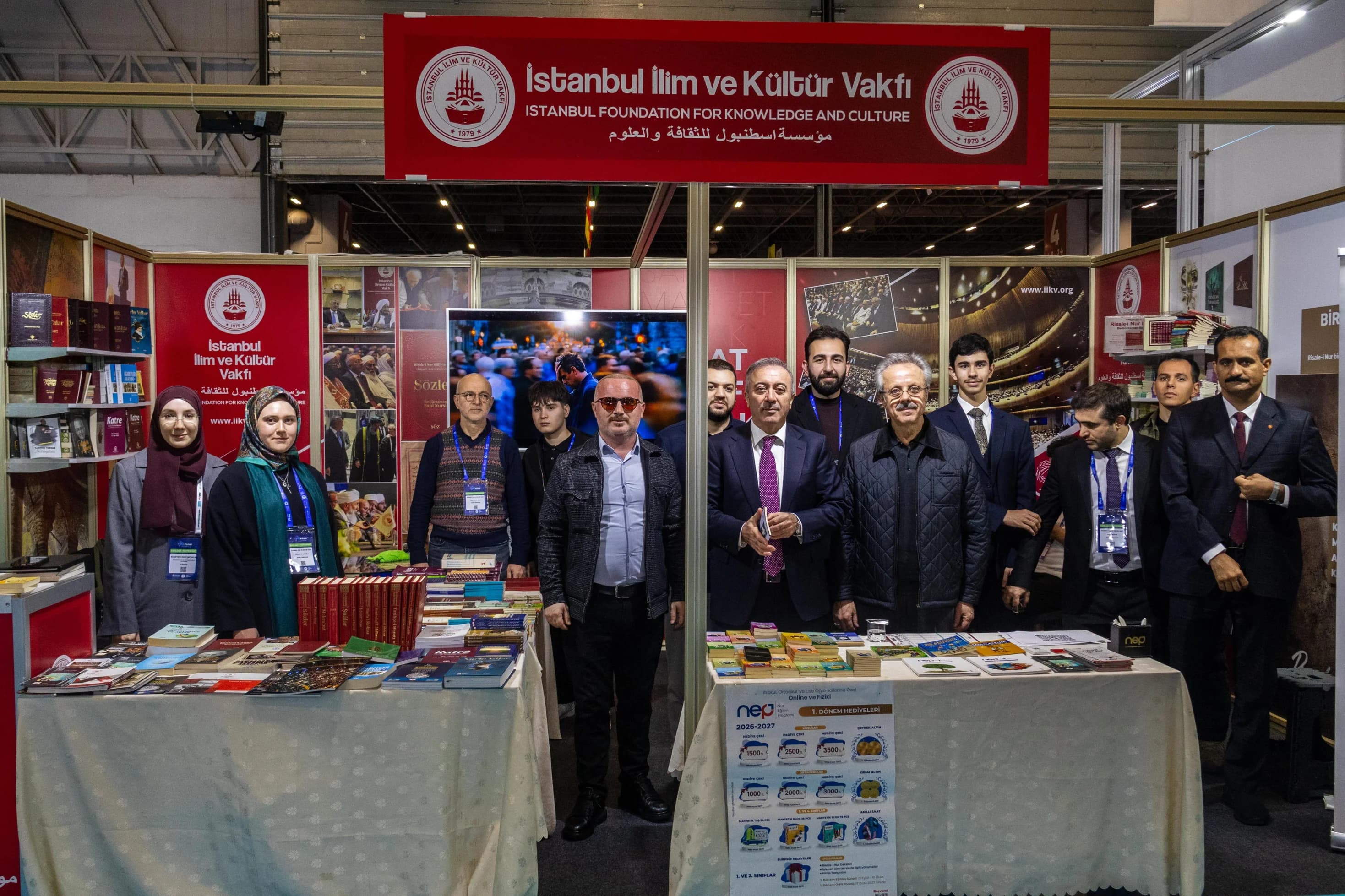
IIKV Welcomes Its Guests at the 5th International NGO Fair
The Istanbul Foundation for Science and Culture (IIKV) is meeting with visitors at the 5th International NGO Fair, held between 25 and 28 November.
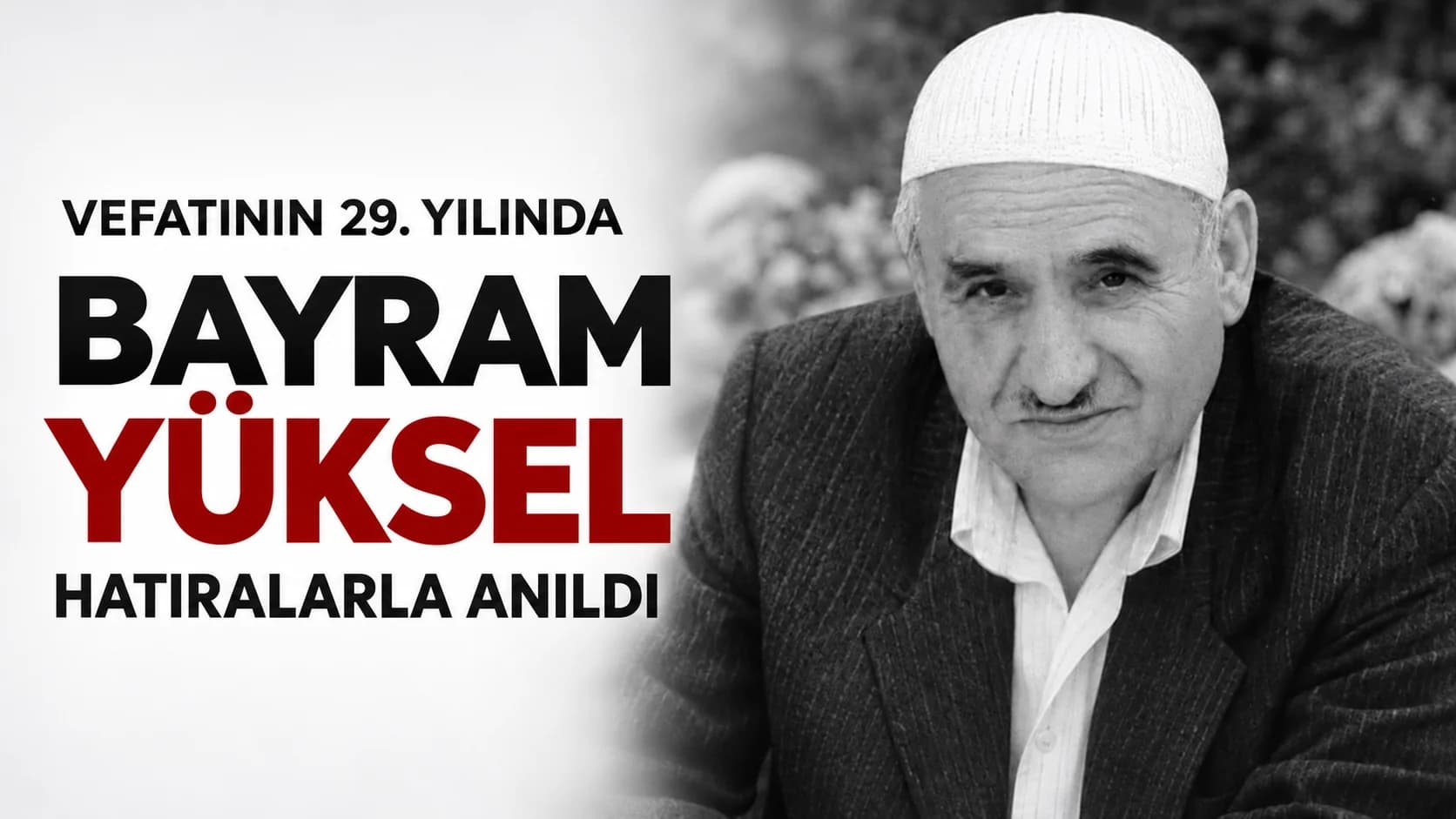
Bayram Yüksel Ağabey Remembered with Recollections on the 29th Anniversary of His Passing
Bayram Yüksel Ağabey, one of Bediuzzaman Said Nursi’s close students, was remembered with prayers for mercy and gratitude at a programme held to mark the 29th anniversary of his passing. The programme, held at the Istanbul Foundation for Science and Culture Conference Hall, was also broadcast live on the foundation’s YouTube channel.
The “Durus-u Imaniye” Period in Gaza: Tent-Based Educational Sessions Begin in Cooperation with İhya Derneği and IIKV
Istanbul-based Uluslararası İhya İnsani Yardım Derneği is entering into an important partnership with the Istanbul Foundation for Science and Culture (IIKV) to provide spiritual support to the people of Gaza.